


Wallet leather should be thick enough to support the design without adding unnecessary bulk where pockets overlap. There is no single best thickness for every wallet. When buying a finished wallet, compare its loaded dimensions, number of layers, pocket layout, and ability to close comfortably. A thick hide alone does not tell you whether a wallet will carry well.
That distinction matters if you are replacing a bulky billfold. A thinner piece of leather can be part of a well-made wallet, while a wallet made from relatively thin leather can still become bulky through extra compartments. The useful question is how the whole design accommodates the things you carry.
What does leather thickness actually measure?
Leather thickness describes an individual piece of material. It is different from the thickness of a closed wallet and different again from how firm the leather feels. A supple piece can be relatively thick; a thinner piece can feel stiff because of its tannage, finish, or construction.
You may see leather sold by ounces. In leatherworking, that measurement commonly expresses thickness: one ounce corresponds to approximately 1/64 inch, or 0.4 mm. They describe leather stock, not a finished wallet specification.
| Leather weight | Approximate thickness of one layer |
|---|---|
| 2 oz | 0.8 mm |
| 3 oz | 1.2 mm |
| 4 oz | 1.6 mm |
| 5 oz | 2.0 mm |
A product described as “4 oz leather” therefore is not a wallet that necessarily weighs four ounces. Before using that number to compare products, find out whether it refers to the exterior, the interior pockets, or every component. Without that context, the specification tells only part of the story.
Why do leather wallets become bulky?
Layers accumulate at the points where you feel the wallet most. Consider a simple illustration: four overlapping pieces that are each 1 mm thick already account for 4 mm of material at that location, before cards, thread, linings, or the opposing side of a folded wallet. That arithmetic is an example, not a measurement of a BBC model.
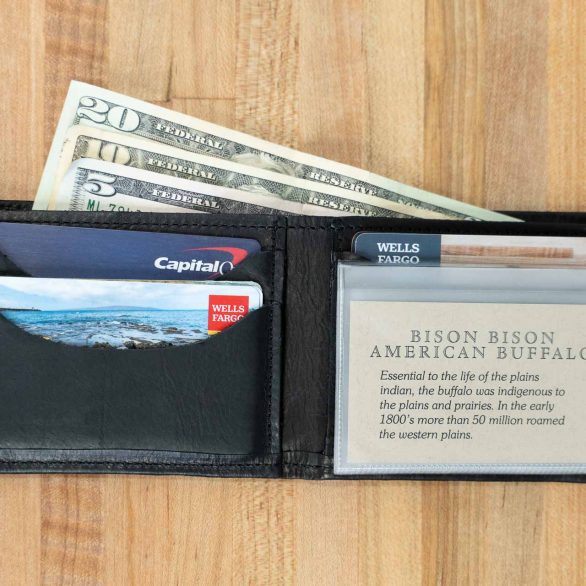
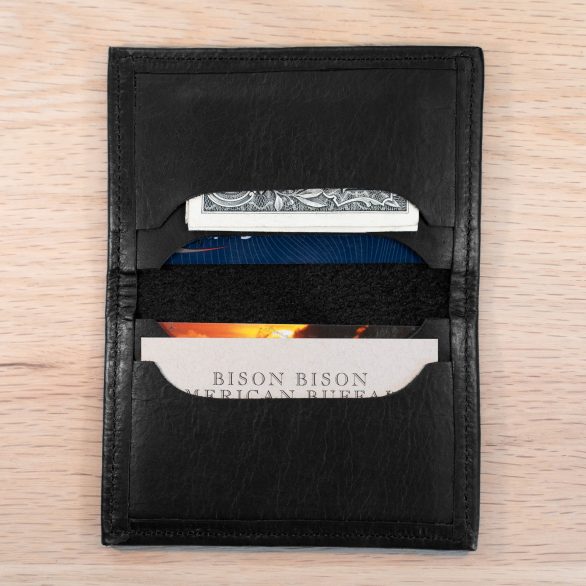
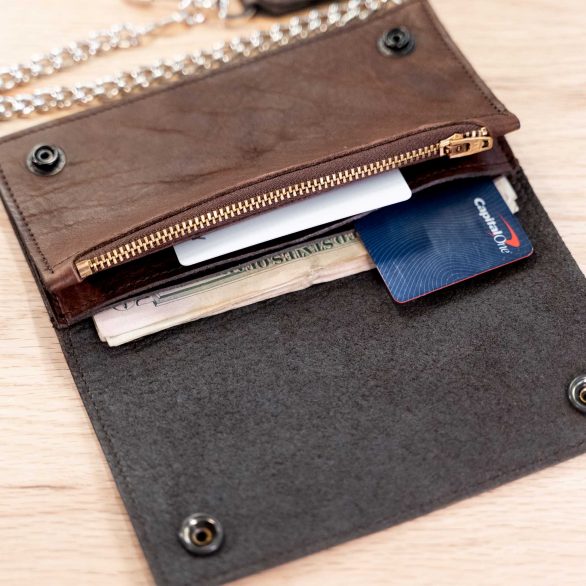
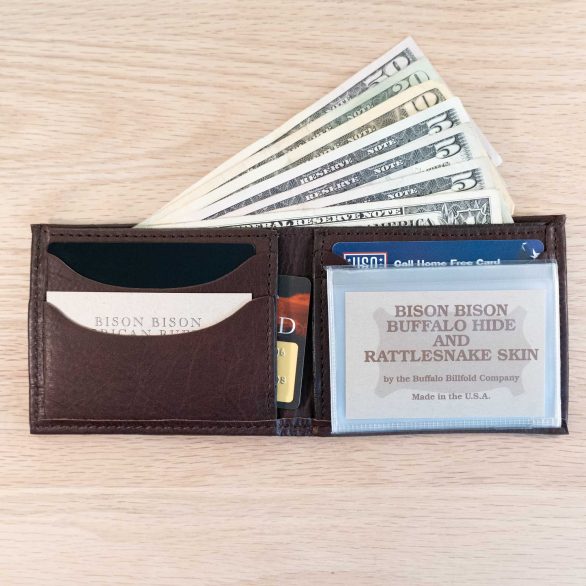
Pocket arrangement changes where those layers meet. Stacked card slots, a separate coin compartment, an ID window, and a bill divider can all be useful. They also occupy space. Whether they are worth that space depends on whether you use them each day.
Folds matter as well. A trifold brings three panels together, while a bifold brings two. That does not make every bifold thinner than every trifold, but it does explain why comparing just the thickness of the outer leather can be misleading. Compare the finished designs with the same intended load.
Does thicker leather mean a better-quality wallet?
Not by itself. Thickness needs to suit the component’s job. An exterior panel, a flexible fold, and a card pocket do not necessarily benefit from the same material thickness. A maker may thin selected areas to reduce bulk where leather turns or layers meet.
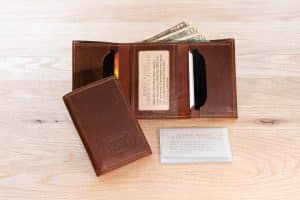
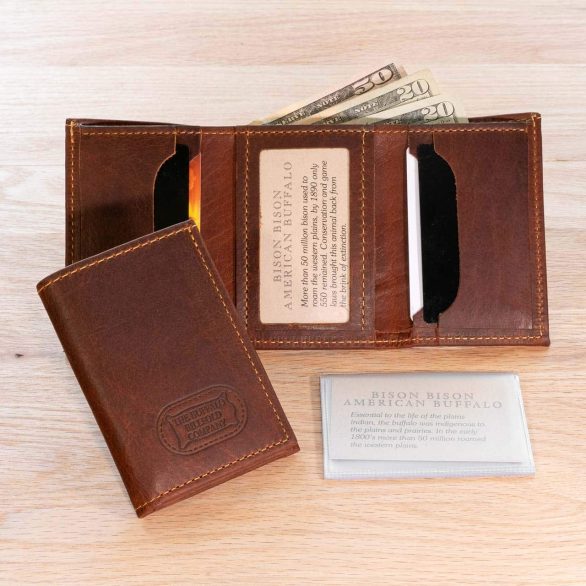
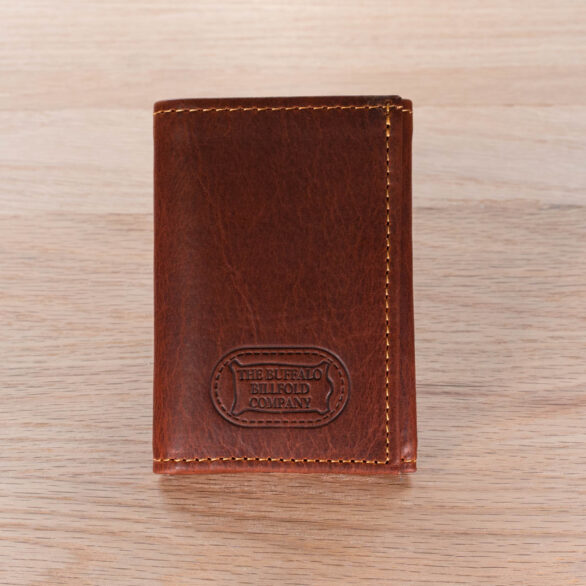
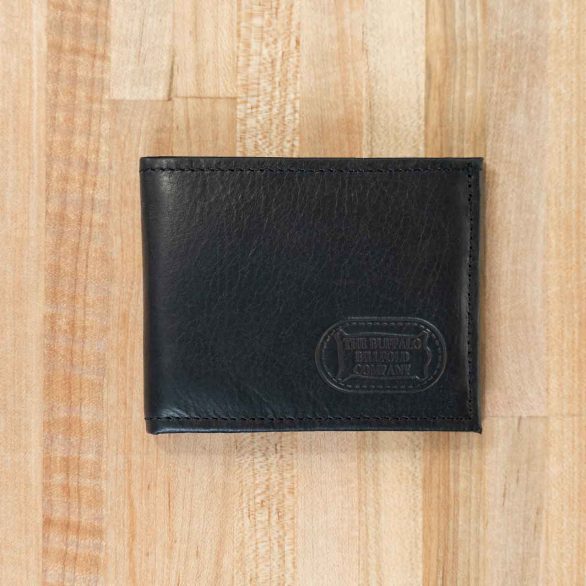
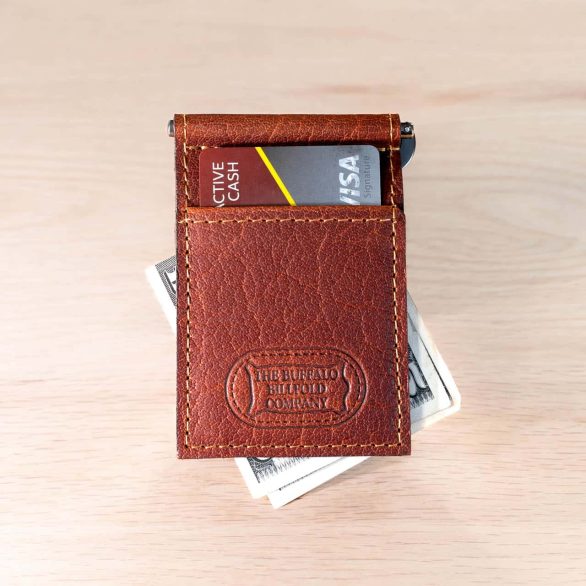
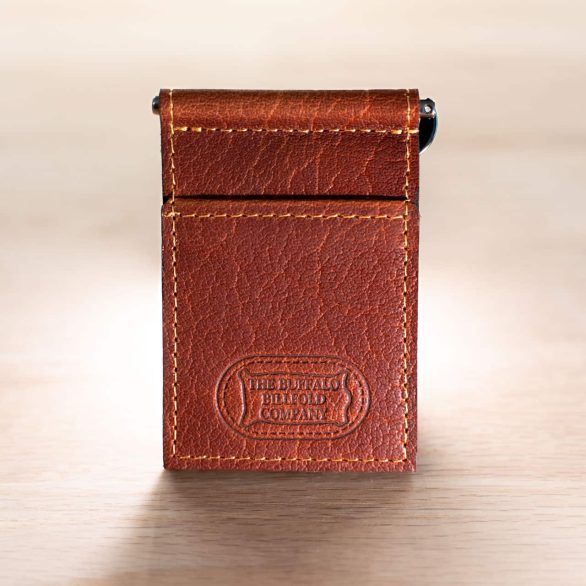
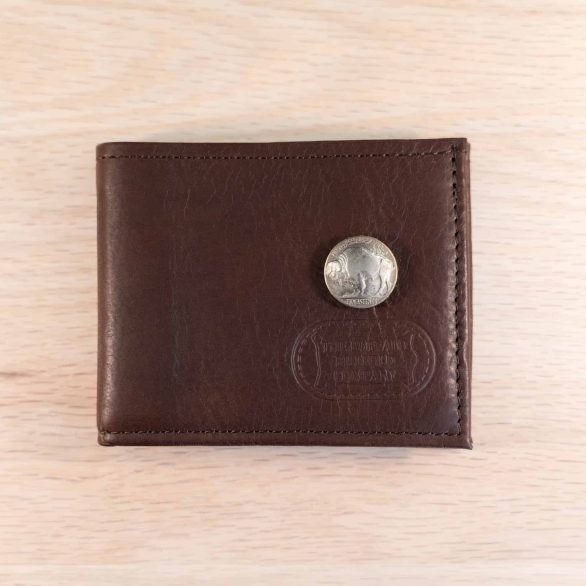
For example, our signature Buffalo Billfold uses skived, hand-rolled top edges. Skiving means reducing thickness in a selected area. In that application, removing some material is part of constructing the edge, rather than evidence that the leather is inferior.
Leather grade answers a different question. If you want to understand the surface and structure of the hide, read our full-grain leather guide. For pocket comfort, combine that information with the wallet’s layout, finishing, and dimensions. Neither the grade name nor the thickness number replaces those checks.
How should you compare wallet dimensions before ordering?
Start with your current wallet, emptied of old receipts and cards you rarely use. Measure its width, height, and closed thickness with your actual everyday contents inside. Then note which part bothers you: a thick fold, an oversized footprint, a bulky insert, or pockets that make cards difficult to reach.
Check whether the new wallet’s measurements describe it open or closed, empty or loaded. A flat product photo cannot reliably answer those questions. If the description gives only width and height, ask about the intended card load and how the wallet closes before assuming it will be slimmer than what you have.
Our handmade minimalist wallet illustrates the distinction. Its listing gives an empty thickness of 3/16 inch and a filled thickness of 3/8 inch. The amount and arrangement of what you carry will affect the result, so treat the filled measurement as a product reference rather than a promise for every possible load.

Which design makes sense for your everyday carry?
| What you carry | What to examine first | BBC starting point |
|---|---|---|
| A small selection of cards and folded bills | Few layers and easy access | Handmade minimalist wallet |
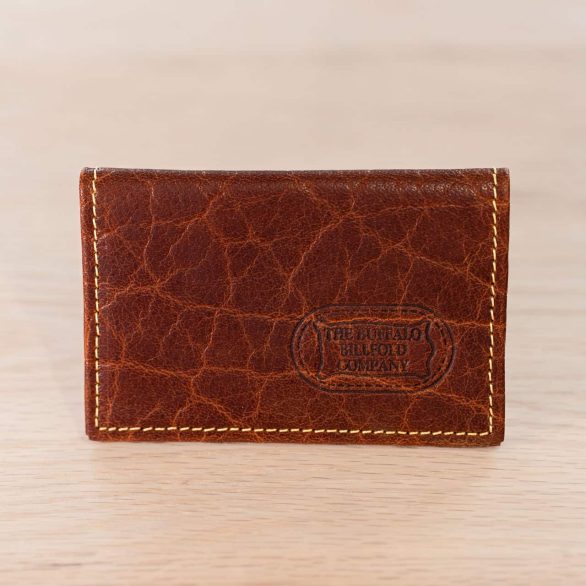
| Cards in a front pocket | Pocket footprint and distribution of cards | Leather front pocket wallet |
| Cards, bills, and photographs | Closed size with the insert in use | Bifold wallet with photo insert |
| Traditional billfold contents | Interior arrangement and edge construction | Signature Buffalo Billfold |
Our leather front pocket wallet lists a 4.25 by 2.75 inch footprint and five pockets. That gives you a different arrangement from a folding billfold. It is worth comparing if your main complaint is where a wallet sits in your clothing rather than the leather’s feel.
The bifold wallet with photo insert suits a different need: keeping traditional wallet contents together. Choosing additional organization deliberately can be better than buying the smallest wallet and then carrying loose items elsewhere. A wallet is only conveniently slim if it still performs the jobs you need.
What should you ask about a thin leather wallet?
Ask what materials form the inside, whether the product dimensions are loaded measurements, and what the pockets are designed to hold. Look at photos of the fold and pocket openings as well as the exterior. If two wallets look similar, those details often explain the difference in use more clearly than a broad durability claim.
Also think about future habits. If you want to carry fewer cards, decide which ones will leave your wallet before ordering. Buying a very small design and immediately overfilling it defeats the reason for choosing it. If you regularly need more contents, select a layout that distributes them comfortably instead of expecting thin leather to eliminate their bulk.
Questions shoppers often ask
Can full-grain leather be thin?
Yes. Full-grain describes the retained grain surface, not a minimum finished thickness. A maker can select and prepare leather for smaller goods while retaining that surface. Judge the completed wallet by its construction and intended use as well as its leather description.
Will a thick wallet become much thinner after breaking in?
Leather can become more flexible and conform to use, but break-in does not remove pocket layers or shrink your cards. Do not buy a wallet that is substantially too bulky expecting normal use to turn it into a minimalist design. Often times those 100 year warranties companies offer come with extra thick leather. It may last long but also be uncomfortable in your back pocket.
Should I choose the fewest pockets possible?
Choose the fewest pockets that organize your actual contents well. Too little separation can concentrate cards into one thick stack which can be ok for many, but not everyone. A few intelligently arranged compartments may carry more comfortably than a smaller design that is overloaded.
Does BBC publish the leather gauge for every wallet?
Individual listings provide their own construction details and dimensions; a leather gauge is not specified on every model. Ask about the particular wallet if that measurement is important to you. We would rather help you compare the right design than have you choose from an assumed specification.
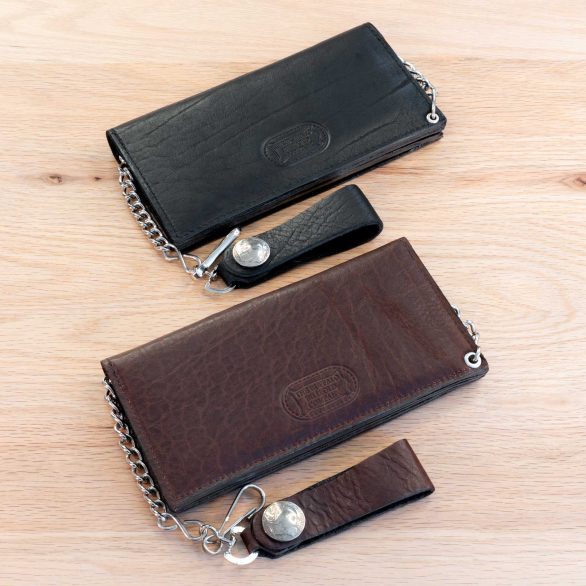
For a first comparison, browse our bison leather wallets with your everyday cards and cash in mind. Match the layout and finished size to that load, then choose the leather and appearance you will enjoy carrying.



 Google
 Facebook
 Trustindex


