

A well-made leather wallet should provide years of useful daily service, but no fixed lifespan applies to every wallet or owner. Leather selection, construction, replaceable components, card load, moisture exposure, and care all affect how long it remains useful. Before buying, compare those details alongside the guarantee rather than treating a promised number of years as the whole answer.
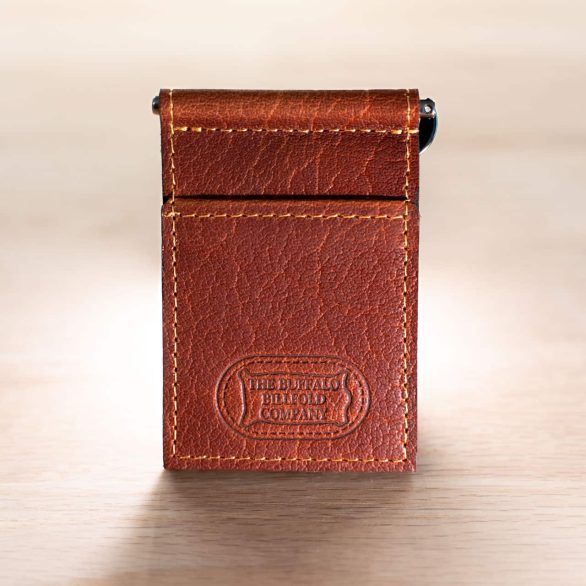
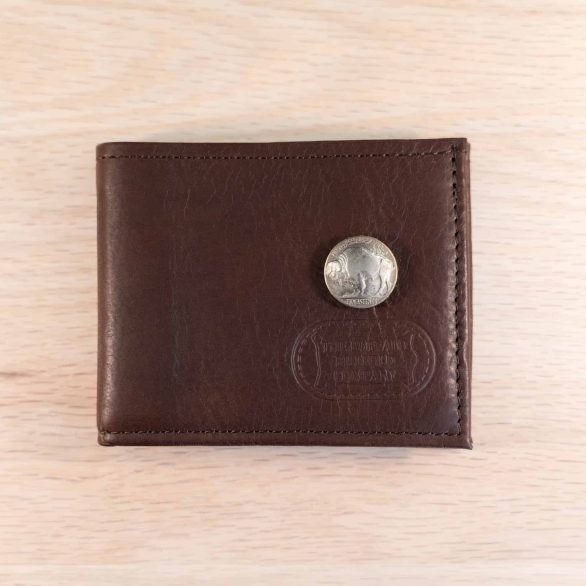
Buffalo Billfold Company makes wallets for long-term use with full-grain American Bison leather and deliberate attention to their construction. That goal includes everyday comfort. A wallet needs to hold your essentials and feel right in your pocket throughout the time you carry it.
What does it mean for a wallet to wear out?
A wallet can look different without having failed. Leather may soften, develop patina, or conform to the way you carry it. Those changes are different from a torn pocket, an opening seam, or a clip that no longer holds bills.
Separate appearance, function, and fit when deciding whether an old wallet needs replacing. If the leather has darkened but your cards are secure and the seams are intact, the wallet may still do its job well. If your everyday contents have changed, you might need a different layout even though the original wallet remains sound.
| What you notice | The useful question |
|---|---|
| A richer color, surface polish, or natural crease | Is it ordinary patina or shaping? |
| A removable photo insert has worn out | Can the insert be replaced separately? |
| Cards have become difficult to remove | Is the pocket overloaded or the layout unsuitable? |
| Stitching opens or leather tears | Does the item need an assessment before continued use? |
| A wallet is uncomfortable in a different pocket | Has your preferred fit or daily carry changed? |
This distinction helps you buy for the part of the experience that actually needs improvement. A cosmetic preference, a capacity problem, and a structural failure call for different decisions.
How much does the leather itself matter?
Leather is the foundation of the wallet, so read the material description carefully. Full-grain leather retains the grain surface of the hide. Buffalo Billfold Company uses full-grain American Bison leather for its wallets, with natural variation in texture and markings.
Our full-grain leather guide explains the material in more detail. When choosing a finished wallet, also ask how that leather has been used in the pockets, folds, and edges. The name of the material alone cannot describe the entire construction.
Thickness needs to suit the design. A thicker panel may make sense in one location and create unnecessary bulk in another. Look for a wallet that balances support and flexibility rather than assuming the thickest-looking option will be the best everyday purchase.
What should you look for in stitching and edges?
Inspect product photographs for the seams around pocket openings, folds, and outer edges. These areas receive repeated handling. Useful information includes how the maker secures seam ends, how edges are finished, and whether the construction has been designed around the wallet’s intended use.
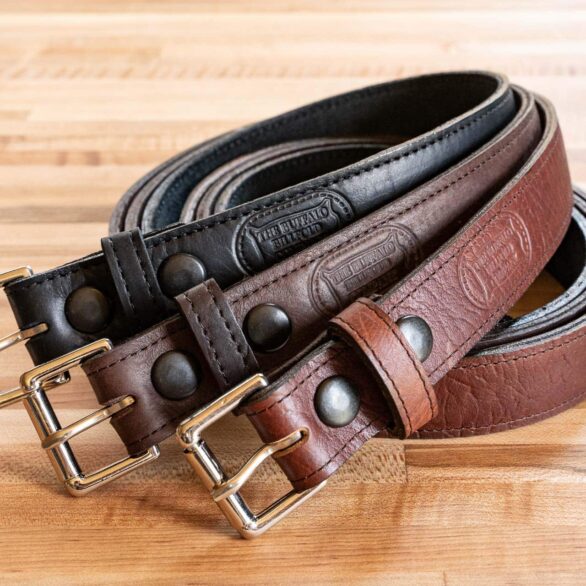
The signature Buffalo Billfold uses skived, hand-rolled top edges. Skiving reduces thickness in selected areas so an edge can be formed without simply stacking more bulk. Our thread information explains why thread strength is part of the overall design.
A photo is helpful, but it cannot establish the lifespan of an unseen seam. If the description leaves an important construction question unanswered, ask the maker. Specific information about how the wallet is built is more useful than a general claim that it is indestructible.

Do all parts of a wallet last equally long?
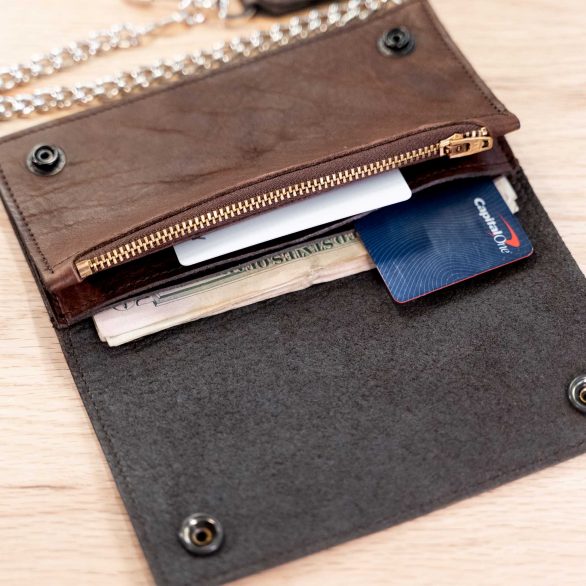
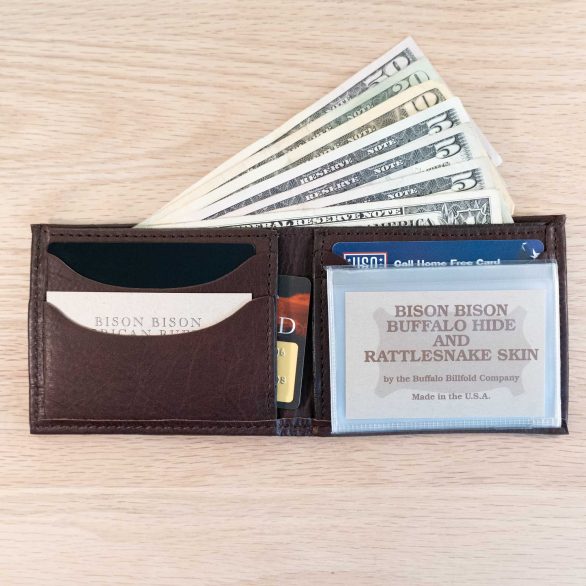
No. Leather, a removable vinyl insert, an integrated ID window, and hardware are different components. Choose them according to what you use, and understand which can be replaced separately.
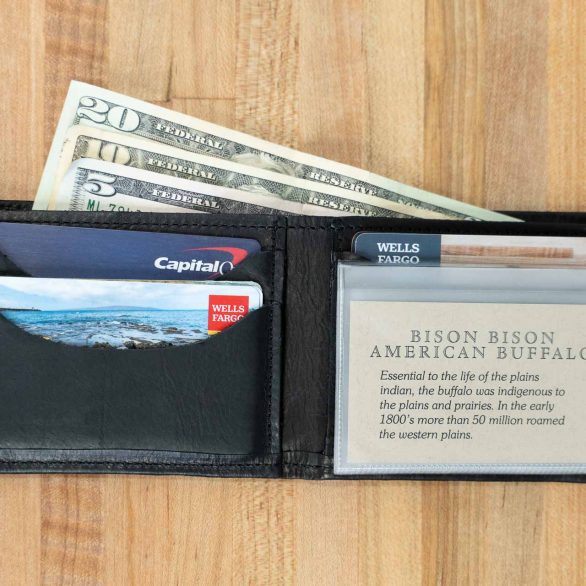
If you like keeping photos in your wallet, a removable insert may be worthwhile. Buffalo Billfold Company sells replacement inserts through wallet accessories. Check the insert’s format and the wallet it fits rather than assuming all inserts are interchangeable.
An integrated ID window is a different decision. Our guarantee states that ID windows are not replaceable. If you remove your ID whenever you use it, you may prefer an all-leather pocket instead. If a visible ID is important to you, the convenience may still justify that component.
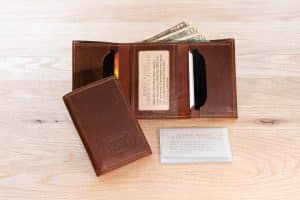
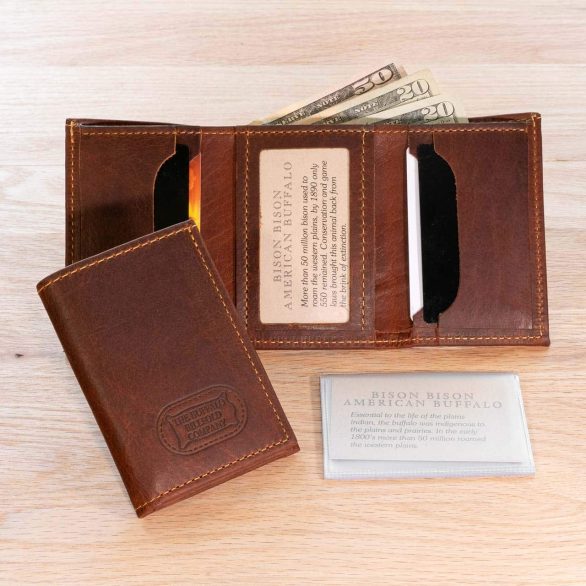
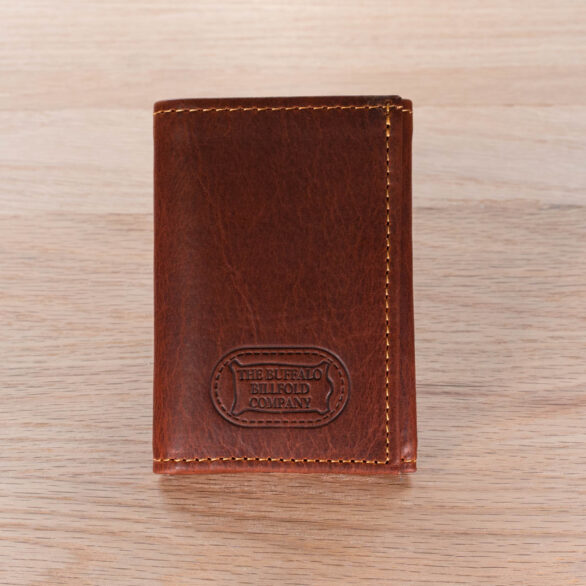
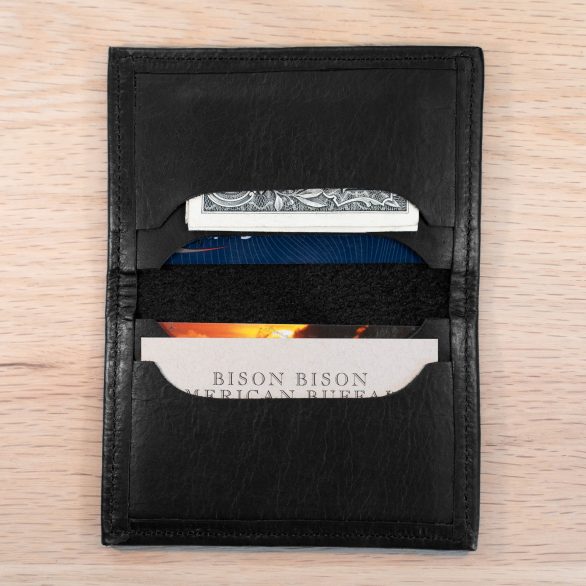
For example, our trifold with vertical pockets has an all-leather interior without a vinyl window or insert. Comparing that design with an ID-window model lets you make the choice before purchase.
How does your card load affect useful life?
Choose a pocket layout suited to what you carry now. Real bison leather card pockets can gradually adapt with use, and some Buffalo Billfold Company designs deliberately use stretchier portions of the hide. That flexibility is useful, but it is not a reason to force an uncomfortable stack into any wallet.
Add cards gradually and pay attention to access and closure. A wallet that requires force to close or remove a card may need a different arrangement or less load. Removing stale receipts and unused cards is a simple way to preserve comfortable use.
More pockets may help when you want to separate cards. A simpler layout may suit someone who carries fewer items together. Neither approach is automatically more durable for everyone; the key is matching the design to your habits.
What care supports long-term use?
Keep routine care simple. Wipe loose dirt away with a clean, soft, dry cloth, avoid soaking, and let accidental moisture dry naturally away from direct heat. Do not treat every change in shine as a need for conditioner.
If suitable leather looks noticeably dry, follow our wallet cleaning guidance and patch-test a very small amount of clear, neutral shoe cream. Many wallets need little additional treatment.
Mink oil has a separate purpose: it can help repel water, but Buffalo Billfold Company does not recommend it for normal touch-ups. It can change the color and feel. Read the mink oil guidance before considering it for water repellency. No routine care product should be treated as a way to make a damaged seam sound again.
How should you compare wallet guarantees?
A guarantee explains what the maker agrees to cover. It does not measure how long every component will last or promise that a wallet’s appearance will stay unchanged. Read the covered components and exclusions before comparing the length or name of different warranties.
For Buffalo Billfold Company wallets and checkbooks, the Longhaul Guarantee covers leather and brass hardware against failure under normal use, subject to its terms. Natural shaping and vinyl or plastic ID windows and inserts are excluded. The policy also excludes water damage and sun fading.
If an existing wallet develops a problem, contact us with the product name, a description, and useful photos so we can assess it against the current terms. Do not assume every cosmetic change needs repair or that every possible repair is covered.
Is a more expensive leather wallet worth buying?
Consider the construction and usefulness you receive for the price. A feature you never use does not become valuable just because it adds cost. Likewise, saving money on a wallet that does not fit your necessary cards may lead to a purchase you soon want to replace.
For an ownership-cost illustration, a hypothetical $100 wallet used for ten years works out to $10 per year. A hypothetical $40 wallet replaced every two years works out to $20 per year. These are examples, not Buffalo Billfold Company prices or lifespan promises; the actual comparison depends on how long you use each item.
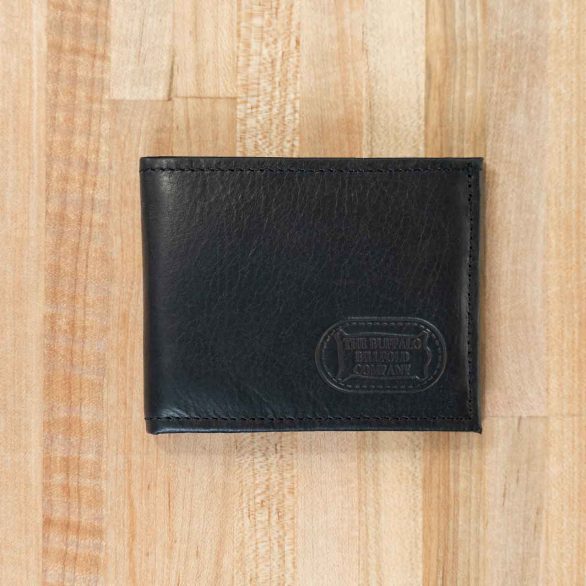
The strongest purchase decision combines a suitable layout, clearly described materials, useful construction details, and understandable support. Compare those factors in the Buffalo Billfold Company wallet collection before deciding which wallet offers the right long-term value for you.

 Google
 Facebook
 Trustindex


