

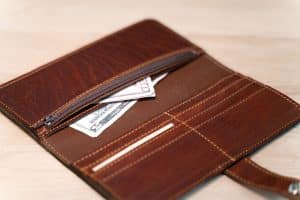


Clean a Buffalo Billfold Company leather belt by removing it from your clothing and gently wiping the smooth leather with a clean, soft, dry cloth. Treat the buckle and any suede backing as separate surfaces. Routine dust does not require soaking or a strong cleaner, and conditioner is an occasional treatment for suitable leather that actually needs it.
A belt receives repeated contact from your hands, clothing, and buckle. A short, careful cleanup lets you remove loose dirt while checking the parts that do the work. The goal is a belt that feels clean and functions properly, with the natural character of the leather intact.
What should you identify before cleaning a belt?
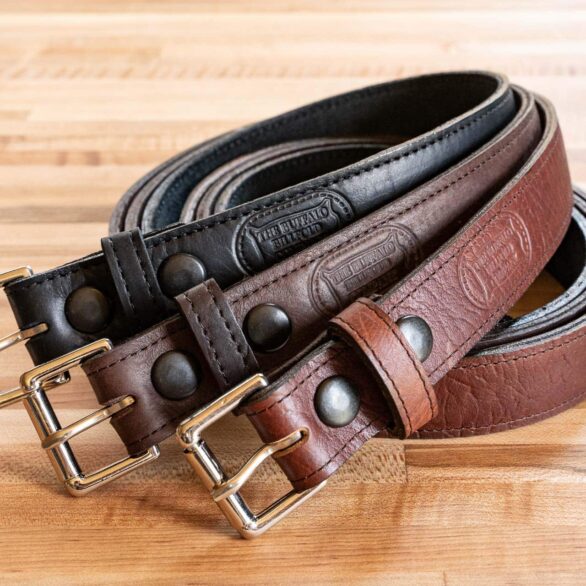
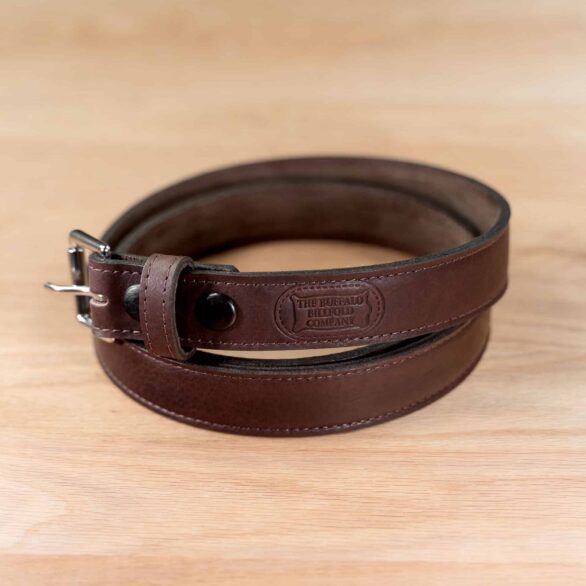
Look at the front, back, edges, buckle, and attachment. A full-grain leather front does not mean every surface should receive the same treatment. Some belts have a suede backing, and buckle finishes and attachments vary by model.
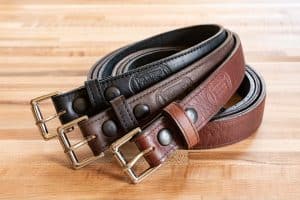
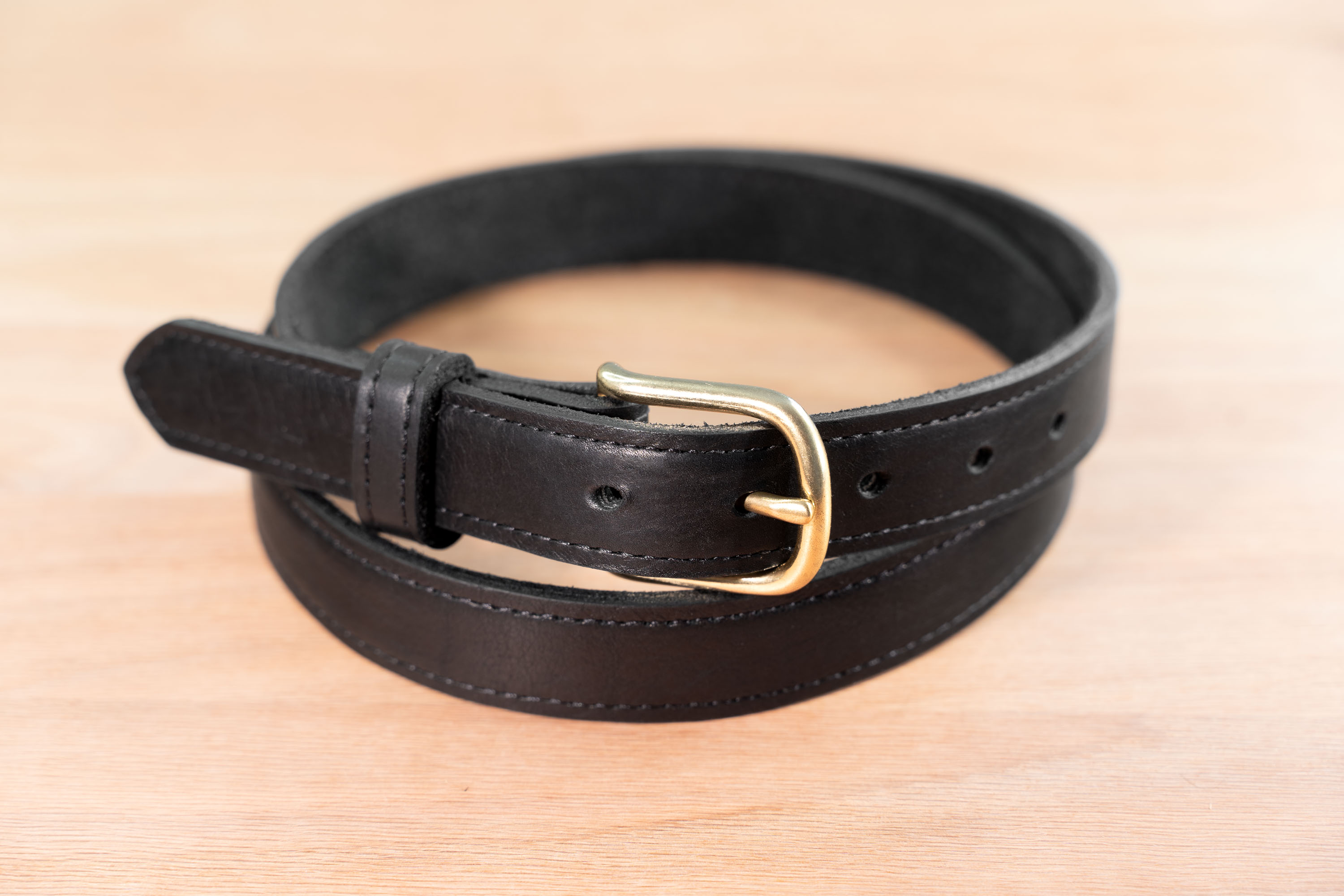
Our Bison Leather Belt uses a snap attachment with a removable nickel-plated steel roller buckle. Our suede-backed leather dress belt combines a full-grain exterior with suede and solid brass hardware. Those details change which areas you clean and which treatments you keep away from the backing.
Read the product description if you are unsure which belt you own. If the material or finish remains unclear, contact Buffalo Billfold Company with a photo before applying a care product. Identifying the construction first is easier than correcting a treatment applied to the wrong surface.
How do you clean the leather strap?
- Remove the belt from your clothing and place it on a clean, dry surface with enough room to support its length.
- Check for loose grit, a fresh spill, or an area of damage before rubbing the surface.
- Use a soft, dry, lint-free cloth to wipe the smooth leather lightly, moving to a clean part of the cloth as needed.
- Work gently around the holes, edges, and buckle attachment without forcing material into a seam or opening.
- Inspect the result and stop when loose surface dirt is gone. A remaining color change is not automatically something more cleaning will remove.
Support the strap while you work rather than pulling it tightly between your hands. Cleaning should not become a stretching exercise. If an area catches the cloth or appears torn, pause and examine it instead of rubbing harder.
Use a cloth reserved for leather care. A rag previously used with furniture polish, metal cleaner, or workshop chemicals can transfer residue even when it looks dry. A clean white or light-colored cloth also makes it easier to notice unexpected transfer while you work.
What should you do about stains or sticky spots?
Separate loose dirt from a spill that has entered the leather. Blot a fresh spill with a clean, absorbent cloth, lifting rather than spreading it. If the belt is damp, let it dry naturally at room temperature before deciding what further attention it needs.
For a dried or sticky spot, identify what caused it and ask about an appropriate treatment. A surface change from oil, ink, a care product, or water may need a different response from ordinary dust. Repeated scrubbing can change the surrounding finish without removing the original mark.
| What you notice | First action |
|---|---|
| Loose dust or ordinary surface dirt | Wipe gently with a clean, dry cloth |
| Fresh moisture | Blot and allow natural drying |
| A sticky or unidentified deposit | Stop adding products and identify the source |
| Dry-feeling smooth leather | Review the conditioning guidance before treating |
| A tear or failing attachment | Ask about repair before relying on the belt |
This approach gives you a useful stopping point. Once loose material has been removed, more pressure is not automatically more effective. Preserve the surrounding leather while you decide whether the remaining issue needs a product-specific assessment.
How do you clean a suede-backed belt?
Keep the suede backing separate from the smooth outer leather in your care routine. Start by removing loose surface debris gently with a clean, dry cloth. Avoid rubbing aggressively to make the suede look like a smooth, polished surface; its texture is part of its construction.
Buffalo Billfold Company’s wallet cleaning guidance explicitly distinguishes smooth leather from suede and warns that the cream discussed there is unsuitable for suede. A product that is appropriate for a smooth exterior should therefore not be spread over the backing by default.
If the suede has a stain or its texture has changed after a treatment, ask about that specific surface before using a brush, eraser, or liquid. You do not need to treat the entire belt just because one area needs attention.
What is the right way to clean the buckle?
Begin with a separate soft, dry cloth and remove fingerprints or loose dirt gently. Keep residue from the hardware away from the leather. The buckle’s material and finish should guide any further cleaning, especially when the surface is plated.
Do not apply metal polish across the assembled belt as though it were all metal. Products intended for a buckle may be unsuitable for the strap or backing. Likewise, do not try to remove riveted hardware as though it were a snap-attached buckle. Ask about persistent deposits or a mechanical problem before taking the assembly apart.
A change in shine is different from a buckle that no longer works properly. Check that the tongue, roller where present, and attachment operate as expected. Read the Longhaul Guarantee for the actual distinction between mechanical coverage and cosmetic changes.
Does the belt need conditioner after every cleaning?
No. Dry wiping does not automatically create a need for conditioner. Buffalo Billfold Company’s leather is designed for minimal routine care. If the smooth leather looks or feels noticeably dry, consult our conditioning guidance before applying anything.
For a suitable smooth surface, test the recommended clear, neutral cream sparingly on an inconspicuous area and wait to evaluate the result. Keep it off suede. For routine touch-ups, do not choose mink oil, saddle soap, or shoe polish as interchangeable substitutes. Mink oil can help repel water, but it is a separate treatment choice that may change color or feel; see our mink oil guidance. Our general leather care instructions explain the intended approach.
How should you put the belt away afterward?
Make sure the belt is dry, then store it without a tight fold or heavy objects pressing on it. Keep it away from direct heat and prolonged sunlight. If it became damp during wear, allow it to dry before returning it to an enclosed drawer or closet.
A natural curve from wearing the belt is not a cleaning failure. Do not soak it or apply heat to force it straight. Fit, ordinary shaping, cosmetic wear, and structural damage are separate questions, and only the last of those necessarily calls for a repair assessment.
Common belt care questions
Can I wash a leather belt in the sink or washing machine?
Do not use either method for Buffalo Billfold Company leather belts. Start with dry surface care, blot accidental moisture, and seek advice for a specific stain rather than saturating the entire strap.
Can I use the same cream on the front and back?
Only if the care instructions confirm that both surfaces are suitable. A suede-backed belt needs a different approach from a smooth leather surface. The full-grain description of the front does not answer that question for the back.
Does a clean belt have to look new?
No. A belt can be clean and functional while retaining a curve, patina, or cosmetic mark. Care should preserve its use and character rather than chase a permanently unchanged appearance.
When choosing your next belt, compare the strap, backing, and buckle in the Buffalo Billfold Company bison leather belt collection. Understanding those details before buying also makes the care routine straightforward afterward.



 Google
 Facebook
 Trustindex


