

Choose a bifold for a familiar mix of cards and bills, a trifold when its extra organization suits your carry, a card holder for a compact selection of essentials, or a money clip wallet when easy cash access matters. The best choice depends on your actual contents, the pocket you use, and the features you reach for each day.
Style names are a useful starting point, but they do not tell you everything. Two bifolds can have different pocket layouts. A card holder may carry several cards in a shared pocket, while another separates them into individual slots. A money clip wallet can also fold like a bifold. Compare the design inside the wallet before choosing by its name or exterior photo.
Start with the wallet contents you really use
Empty your current wallet and separate everyday essentials from things you rarely reach for. Count payment cards, identification, access cards, and any other cards you need in physical form. Include cash, receipts, coins, or photos if those are part of your normal routine.
Then identify what you want to improve. Is the old wallet too thick? Is your most-used card hard to reach? Are you carrying a photo insert you never open? A clear answer helps you choose a useful change instead of replacing one inconvenient layout with another.
Think about the busiest ordinary day, too. A wallet that works only when you remove a necessary card or leave your usual cash at home may be smaller than you need. Aim for a comfortable everyday load rather than the smallest possible empty wallet.
How do the four styles compare?
| Style | A good starting point when you want | What to check before buying |
|---|---|---|
| Bifold | Cards and bills in a familiar two-panel layout | Card-pocket arrangement, bill space, and loaded thickness |
| Trifold | More ways to separate cards or show an ID | Actual pockets, folded depth, and whether the three panels close comfortably |
| Card holder | A compact wallet focused on cards | Shared versus separate pockets and space for occasional folded cash |
| Money clip wallet | Cards plus readily accessible bills | Clip design, card pockets, and room for your usual stack of cash |
These are design tendencies, not guaranteed capacities. A particular trifold does not automatically hold more than every bifold, and a wallet advertised as minimalist can still become thick when heavily loaded.
When is a bifold the right choice?
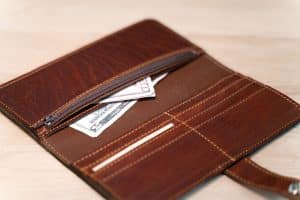
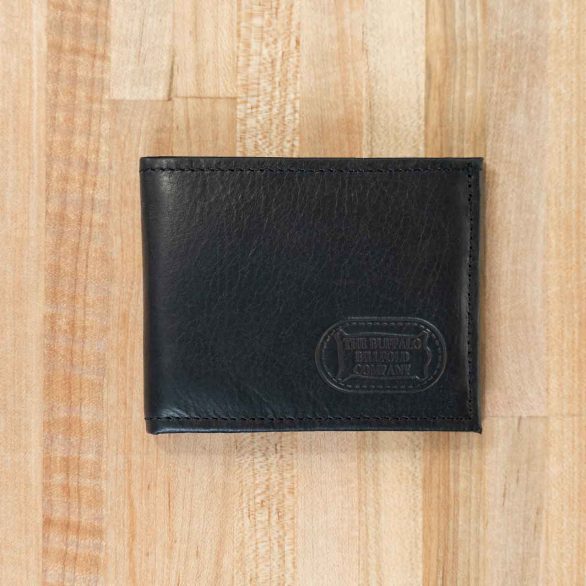
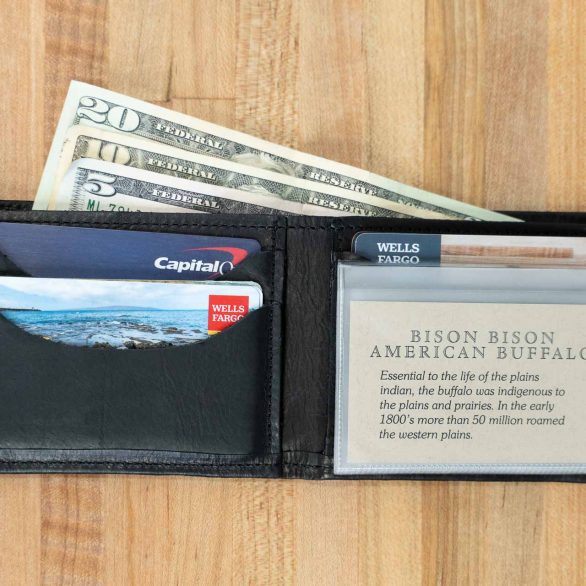
A traditional bifold is a practical place to start if you carry both cards and bills and like opening the wallet once to see its contents. Many designs have a full-length bill compartment, so you do not need to fold each bill separately before putting it away.
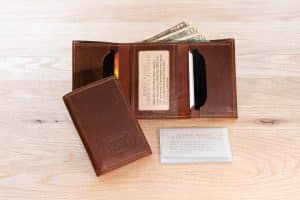
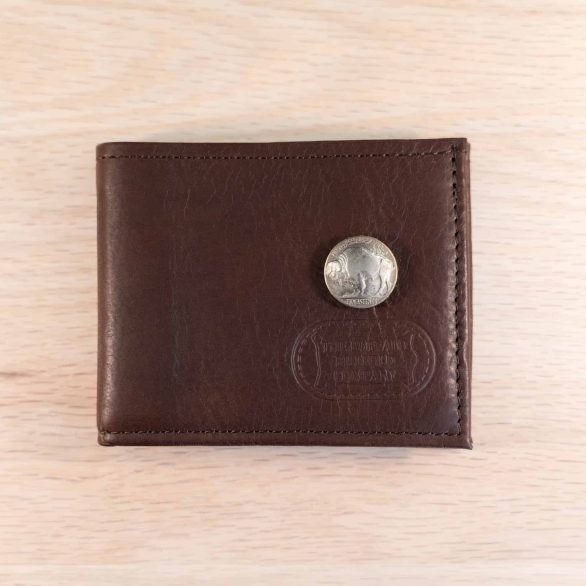
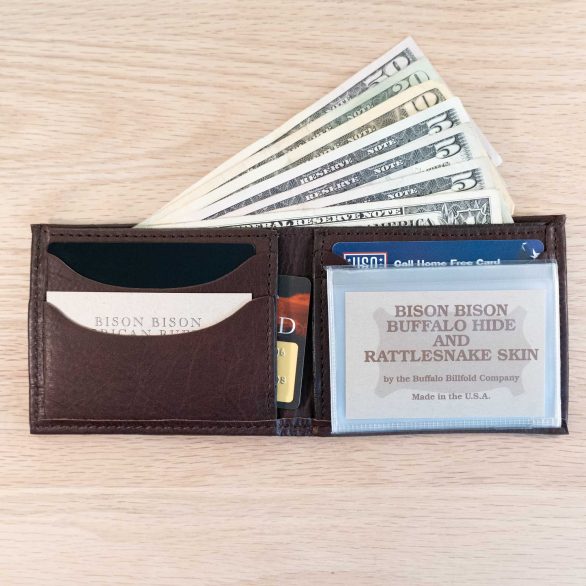
Look closely at the interior. Our signature Buffalo Billfold has an all-leather interior with card and inner pockets, a bill slot, and skived, hand-rolled top edges. The Mens Bifold Leather Wallet with Photo Insert offers a different arrangement for someone who wants a removable insert.
Choose those features according to use. If you carry photos or additional cards in an insert, it may earn its space. If you never use one, an all-leather pocket layout may be a better match. Both can be sensible purchases; the right comparison is how you will organize the actual wallet.
When should you consider a trifold?
A trifold brings three panels together when closed. That can provide convenient organization within a relatively compact footprint, but the folded panels and their contents also affect depth. Check the loaded shape rather than assuming the style is automatically too bulky or automatically higher capacity.
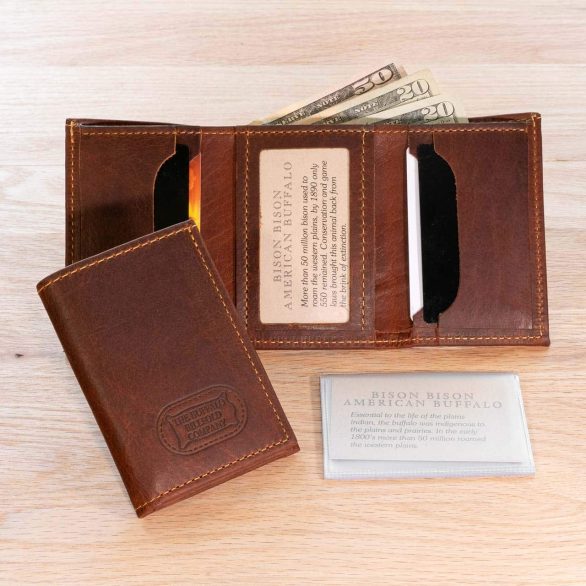
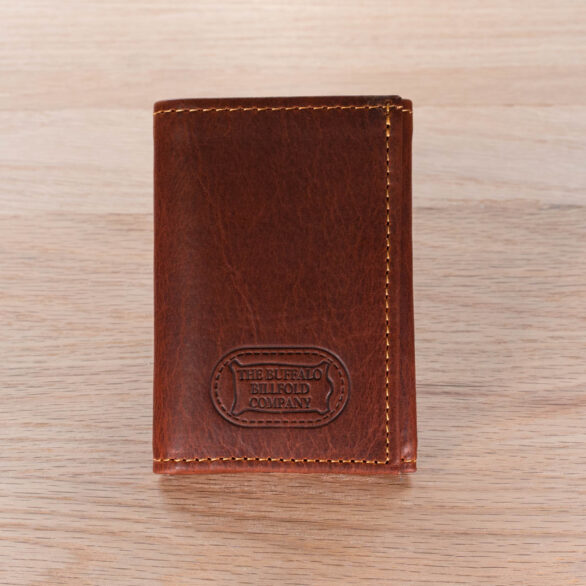
Buffalo Billfold Company offers distinct trifold layouts. The trifold with an ID window suits someone who values visible identification and a photo insert. The trifold with vertical pockets uses an all-leather interior with six vertical pockets, three inner pockets, and a full-length bill slot.
The difference matters more than the shared trifold label. Decide whether you want an ID window, separate leather pockets, or a removable insert, then compare dimensions. If you are replacing a trifold you already like, a similar layout can be more useful than switching styles solely to follow a trend.
Is a card holder enough for everyday use?
A card holder can be a complete everyday wallet when most of your transactions use cards and you carry little cash. It can also serve as a smaller second wallet for outings when you need only a few essentials.
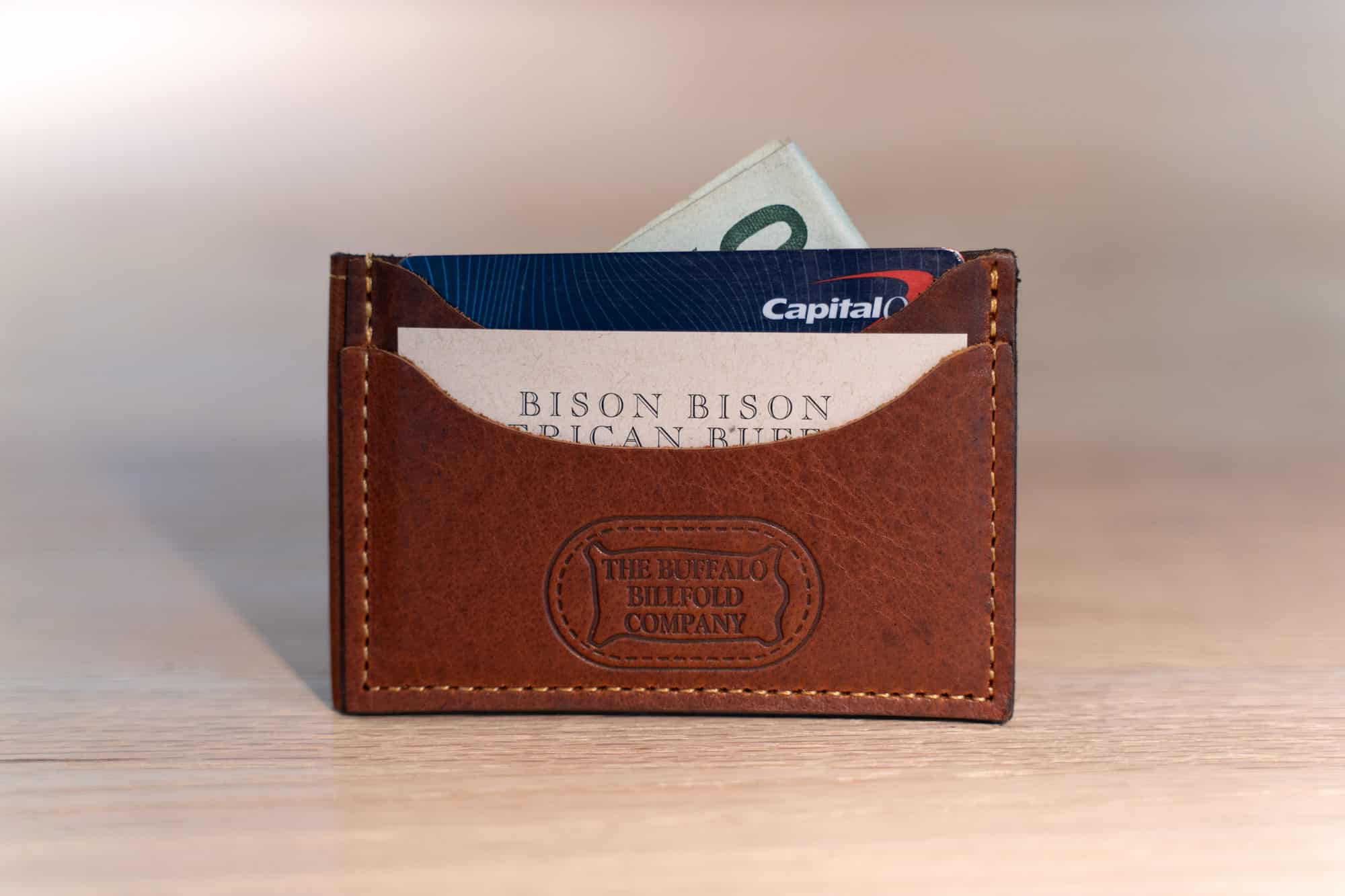
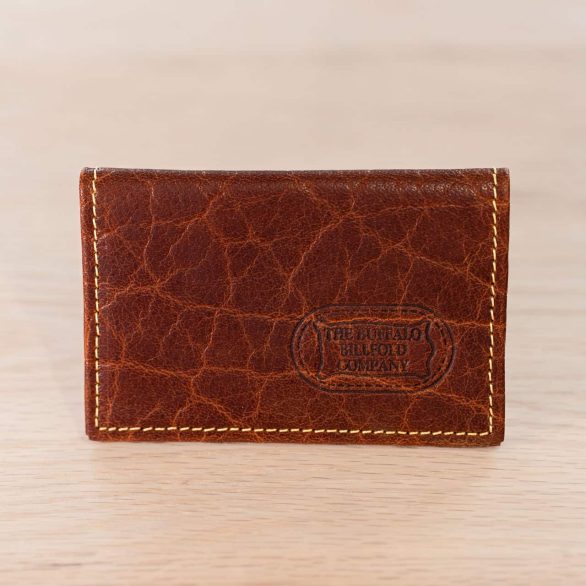
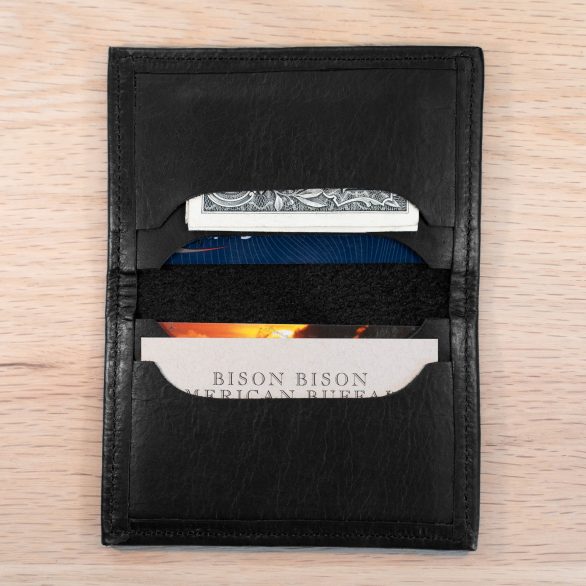
Our Handmade Leather Front Pocket Wallet has five card pockets: two on each side and one in the center. That arrangement lets you separate frequently used cards without opening a fold. The Handmade Leather Minimalist Wallet takes a simpler approach with two pockets that can accommodate cards and bills.
Shared pockets and individual slots feel different in use. A shared pocket may let you carry several cards together, while separate pockets make it easier to assign a place to each card. Neither layout removes the thickness of the cards themselves. If you need lots of separate access points, choose enough pockets for that task.
Who benefits from a money clip wallet?
A money clip wallet works well when you want to carry bills along with cards and prefer a clip to a conventional bill compartment. It can be a compact everyday choice, but the clip and the amount of cash you carry both contribute to its shape.
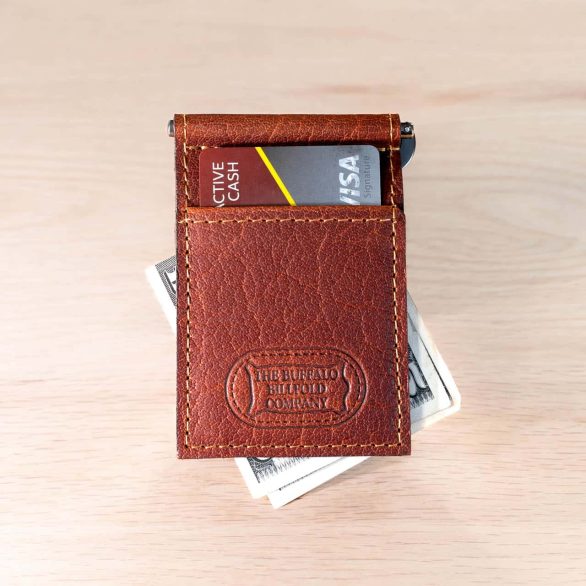
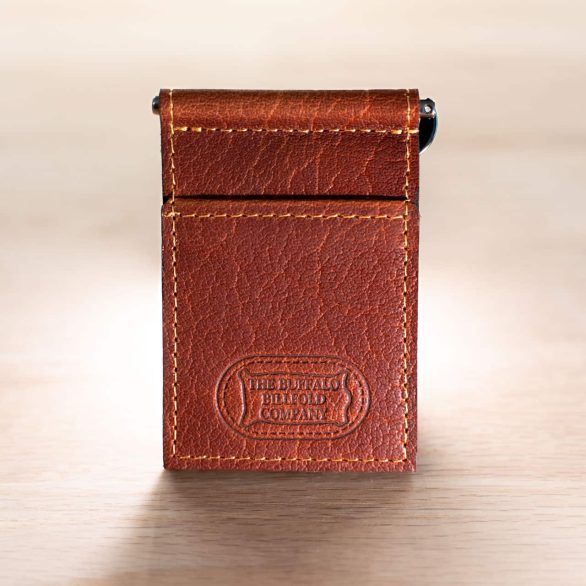
Our Leather Money Clip Wallet combines a folding design, a metal clip in the center, and two card pockets. The Leather Card Holder with Money Clip and Six Card Pockets provides more separated card storage, including outside pockets for quick access.
Consider how you use cash. Do you frequently add bills, carry receipts with them, or want to reach a payment card without opening the wallet? Compare the actual pocket and clip arrangement against those habits. A slim-looking photograph cannot tell you how comfortable a wallet will be with your usual contents.
How can you judge pocket fit before ordering?
Measure a wallet you already own after removing unnecessary contents. Record its closed width, height, and thickness with your regular carry inside. Also note whether it feels too tall, too wide, or too thick; those are different problems.
Check whether the new product’s measurements refer to the wallet open or closed, empty or filled. Buffalo Billfold Company’s dimensions guidance explains where to find that information and how to ask for a missing measurement.
For front-pocket carry, compare the footprint as well as thickness. Clothing varies, and a wallet that works in one pair of trousers may be awkward in another. If you are uncertain, send us the product name and the measurements you want to compare before ordering.
Which optional features deserve their space?
An ID window helps when you regularly show identification, but an all-leather pocket may suit someone who removes the card anyway. A photo insert adds organization and thickness. A coin pocket is useful only if you regularly carry coins. Choose each feature because you expect to use it.
RFID protection is a separate feature from wallet shape. Our RFID wallet information points to the relevant option; a standard leather wallet should not be assumed to have shielding just because it is a bifold or trifold.
What if you are buying a wallet as a gift?
Start with the recipient’s current habits. Notice the style they carry, whether they use an ID window, and whether they prefer cash or cards. A familiar arrangement with better-suited materials can be an easier transition than a radically different layout.
Check the return policy before gifting. Returns for a refund are available within 30 days of purchase when the item is unused and in new condition. Allowing a wallet to stretch and break in through daily use is different from checking whether its dimensions and layout suit the recipient.
How should you make the final choice?
Narrow your choice to the styles that fit your contents, then compare the interior, measurements, and optional features. Choose a wallet with enough useful organization to keep daily access comfortable. Leather can adapt with normal use, but break-in will not add a missing pocket or turn a card holder into a full bill compartment.
Browse the Buffalo Billfold Company wallet collection with that checklist in mind. If two designs still look equally suitable, ask us about the specific difference that matters to you: your card load, pocket size, cash use, or preferred interior.

 Google
 Facebook
 Trustindex


