

Choose an unlined leather wallet if you prefer a simple leather interior that will last longer; consider a lined or fabric-core wallet when its construction provides the interior feel you want. Neither description guarantees better quality. The important distinction is what material is inside, what it does, and how the pockets and seams are made.
A wallet’s exterior can look excellent while leaving its interior largely unexplained. Before buying, open the product photos and read beyond “leather wallet.” The inside is where cards slide, cash folds, and pocket edges receive repeated use. It deserves as much attention as the color of the outside.
What is the difference between lined, unlined, and all-leather?
An unlined leather component has no separate lining covering its inner surface. You may see or touch the reverse side of the leather, sometimes finished to suit that use. It does not necessarily mean the entire wallet consists of a single piece or has no adhesive, thread, reinforcement, or separate pockets.
A lined component has another layer on the inside. That layer might be fabric, leather, or a different material. A fabric core is a related but distinct construction: the textile forms part of the wallet’s interior architecture rather than simply covering an otherwise complete leather pocket.
All-leather generally describes the principal wallet panels and pockets. It should not be interpreted as a claim that stitches, fasteners, or every manufacturing aid are made of leather. When a listing uses the term, check the specific component description rather than filling in the missing details yourself.
| Construction description | What to establish before buying |
|---|---|
| Unlined leather | How the reverse surface is finished and which compartments are unlined |
| Fabric-lined leather | The lining material and how it is attached at openings and seams |
| Leather-lined | How the additional leather affects thickness and flexibility |
| Leather exterior with fabric core | Which panels are leather and what role the textile plays |
Is an unlined leather wallet more durable?
It removes a separate lining from the areas where it is used. That means there is no fabric lining in those areas to detach or wear through. However, the remaining leather, stitching, and pocket edges still need to be suitable for repeated use.
A textile can also be selected deliberately for an interior job. Calling all fabric “cheap lining” ignores differences in the fabric itself and in how the wallet is assembled. A sturdy, well-integrated core should be assessed differently from a loosely attached lining whose material is not identified.
The most helpful product information names the materials and shows the interior. If a seller can explain why a textile is there, how the pocket mouths are finished, and what the guarantee covers, you have a much better basis for comparison than an unsupported claim that every lined or unlined wallet is best.
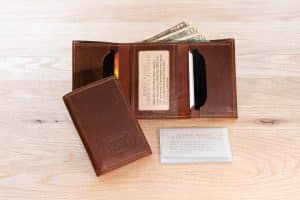
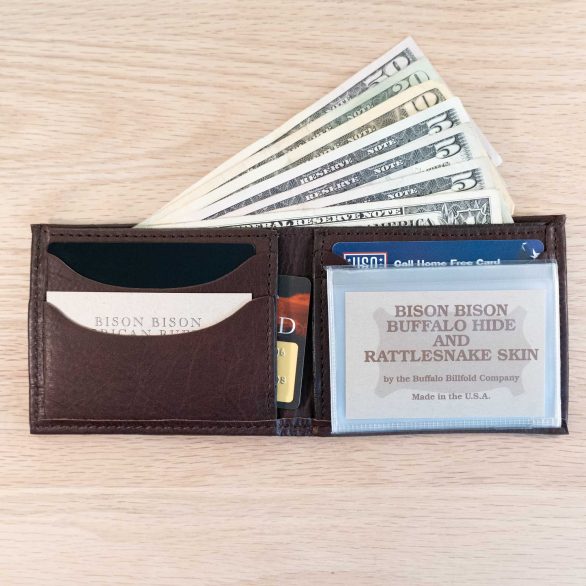
Having been making wallets for over half a century, we have seen many customers come in with many wallets of all styles. The one thing we’ve noticed is that all-leather, high quality, full-grain wallets with no lining always last longer. This is why we choose to make wallets without lining and instead go to extra expense to add a finishing to the back side of our leather so you get the benefit of a nice interior feel without the weaker fabric lining.
Which construction makes a thinner wallet?
There is no universal winner. Omitting a separate lining can reduce layers, but a wallet with leather on every interior panel may use more material than a design that uses a thin textile in selected locations. Card-slot arrangement and the number of folds also influence the finished thickness.
Compare closed measurements and the same realistic contents. A lining that feels almost weightless in your hand can still be part of a wallet with many overlapping pockets. Conversely, an unlined minimalist design may be compact because it has fewer compartments, not simply because its pockets are unlined.
Be especially cautious with the phrase “thin leather wallet.” Ask whether that means thin exterior leather, a thin empty wallet, or a wallet that stays compact with the contents you plan to carry. Your goal is comfortable daily use, and the complete construction determines that experience.
What interior constructions does Buffalo Billfold Company offer?
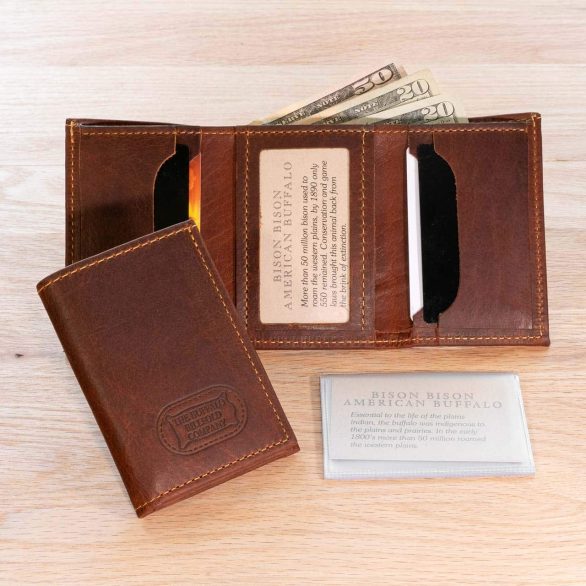
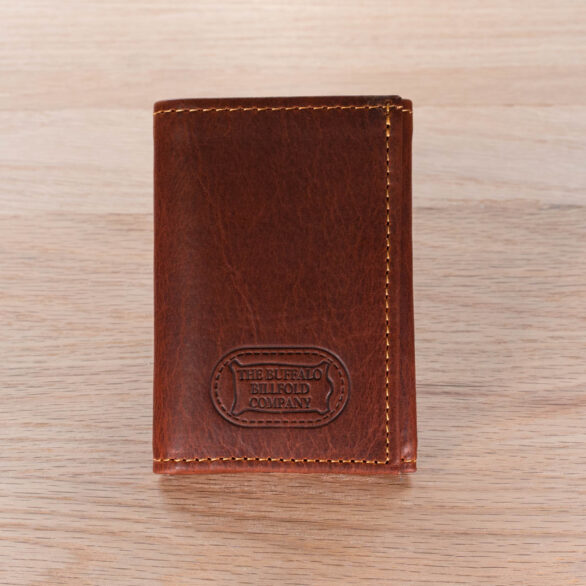
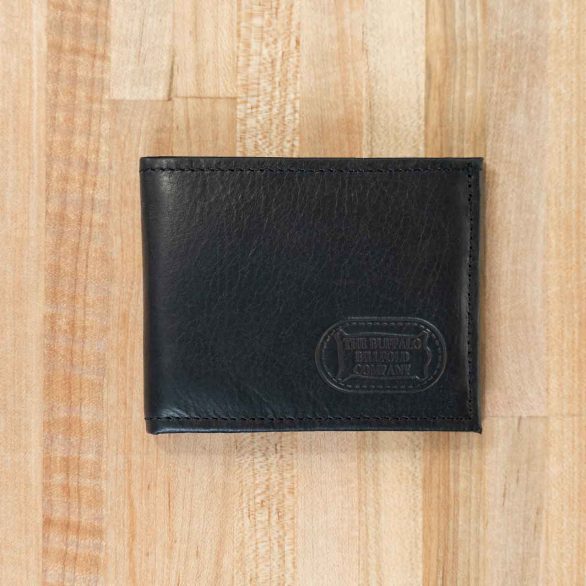
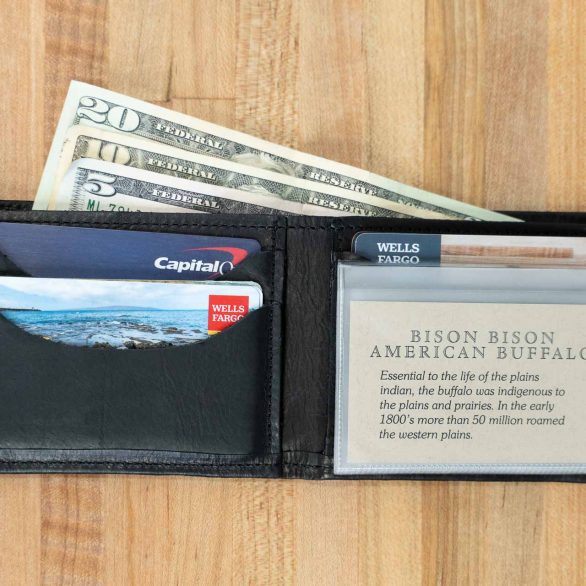
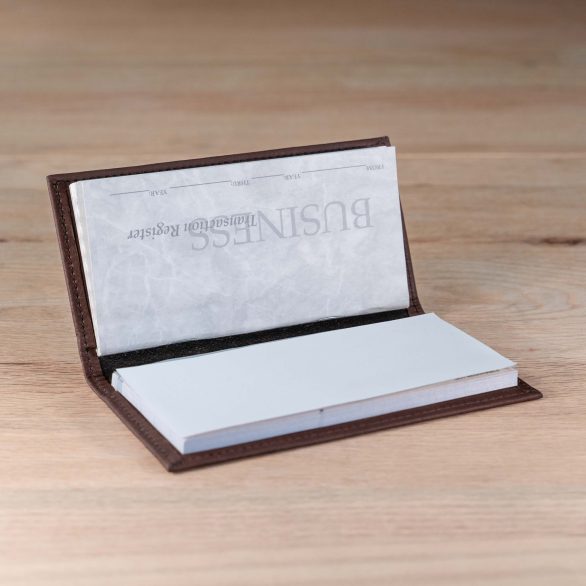
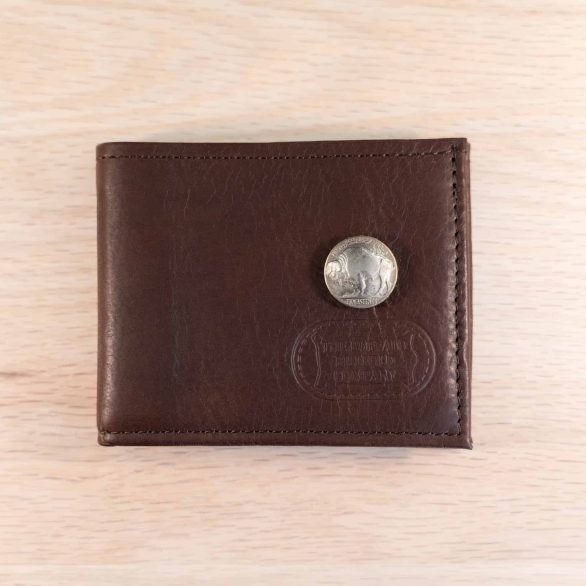
Our men’s bifold leather wallet with photo insert specifies no fabric lining. Its description explains that a finish on the back of the leather allows that surface to serve without a separate fabric lining. This is a useful option if you want a traditional billfold arrangement with a leather interior.
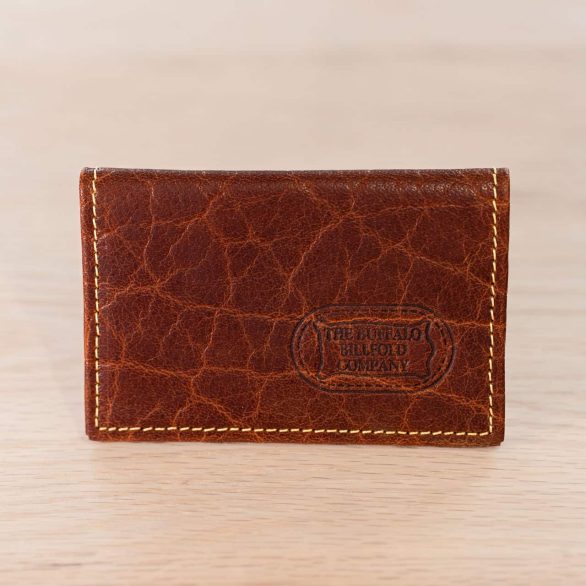
Our signature Buffalo Billfold is an all-leather wallet with skived, hand-rolled top edges. It is another construction to compare if the feel and appearance of leather throughout the main wallet components are central to your choice.
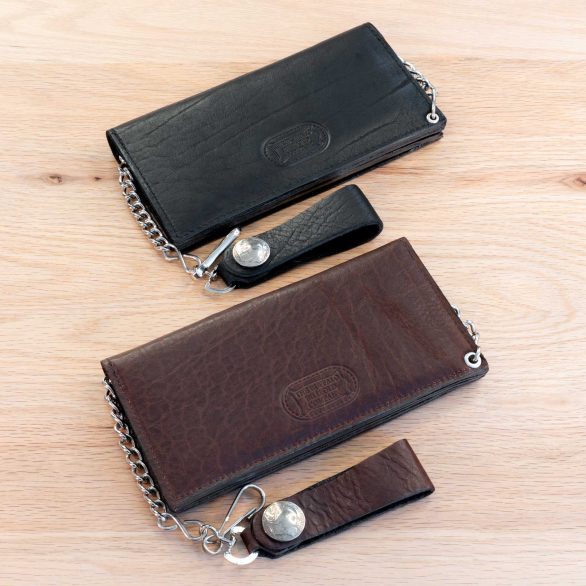
Our Black Buffalo leather wallet takes a different approach: it combines full-grain American Bison leather with a ballistic nylon core backed by sailcloth. That textile is an intentional part of the design. It should not be confused with a generic, unidentified lining or assumed to have the same construction as our all-leather models.

These examples also explain why the word “leather” on a product title is not a complete interior specification. Buffalo Billfold Company offers more than one approach because people value different pocket arrangements and handling characteristics. Choose the individual model’s construction, rather than assuming that every Buffalo Billfold Company wallet has an identical interior.
What should you inspect at the card slots and bill pocket?
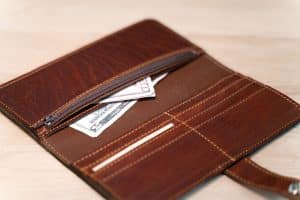
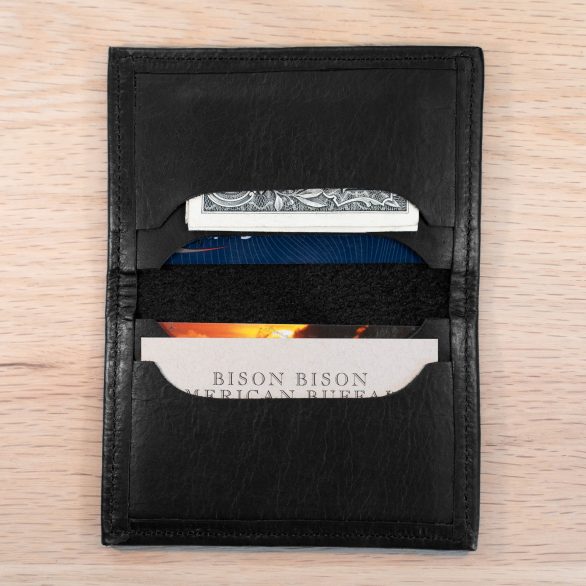
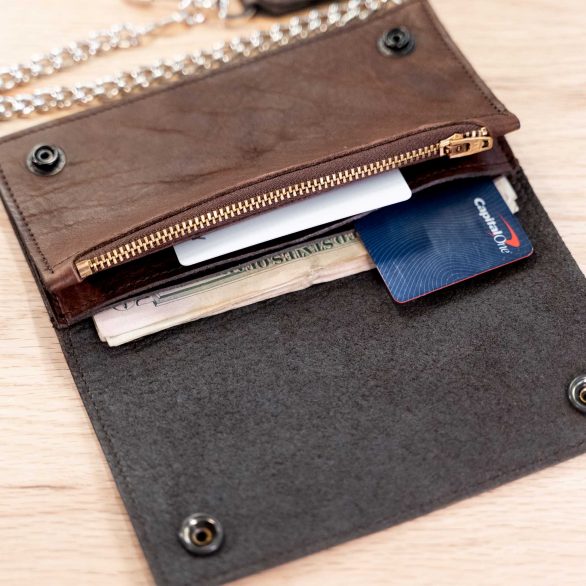
Look for interior photos that show the full bill compartment, the openings of the card slots, and the fold. You want to understand which surfaces your cards contact and where materials meet. An exterior-only photo is insufficient for comparing lining choices.
At pocket openings, examine whether the edges look neatly finished and whether stitching appears consistent. Photos cannot prove long-term performance, but they can show whether the seller is giving you a clear view of the construction. If an important area is hidden, ask for clarification before ordering.
Consider your own use, too. Someone who removes the same payment card repeatedly may prioritize a straightforward, accessible pocket. Someone carrying photographs, paper cards, and bills may place more value on separation. Buying solely by lining type can overlook these everyday differences.
How should care and repairs influence your decision?
More than one material can mean more than one care consideration. Avoid soaking a wallet or assuming a cleaner that suits one component is suitable for everything attached to it. Follow the maker’s instructions for the completed product, including any windows or inserts.
Our full-grain leather care guidance is the starting point for Buffalo Billfold Company leather care. For repairs, identify the particular part that needs attention. A removable photo insert, fixed ID window, seam, and interior panel are different components and may have different repair possibilities. See our guarantee rather than assuming every interior element has identical coverage.
Questions shoppers often ask
Does unlined mean unfinished or rough?
No. Unlined means there is no separate lining on that component. The reverse of the leather can be prepared or finished for its intended use. Read the product description to understand the surface rather than judging it from the word alone.
Is a leather wallet with nylon inside still a leather wallet?
It can accurately be described as having a leather exterior and a nylon interior or core. The useful product description identifies both. If your preference is an all-leather construction, choose a model that explicitly describes that construction.
Does a waterproof component make the wallet waterproof?
No. A material used inside a wallet does not establish a waterproof rating for the assembled wallet, its seams, or its openings. Do not use that component description as a reason to expose the wallet or its contents to water.
Which should I buy as a gift?
Start with the recipient’s current layout: bifold or trifold, photo insert or none, and the number of everyday items. Then select the interior construction they would appreciate. Matching familiar organization is usually a more useful starting point than assuming that everyone prefers the same lining.
Compare the interior photos in our bison leather wallet collection. If an all-leather interior matters most, a customer favorite is our signature Buffalo Billfold.

 Google
 Facebook
 Trustindex


