

Rattlesnake skin brings natural pattern and texture to wallets, guitar straps, purses, and other leather goods. Used thoughtfully, it gives an everyday item a distinctive Western character. But appearance is only part of the story. The tanning, supporting leather, stitching, and placement of the skin all matter to the finished product.
At Buffalo Billfold Company, we pair genuine rattlesnake skin with full-grain American Bison leather. The combination lets us showcase the snake’s markings while building a practical leather item around them. Here is what to know when choosing a finished piece or planning a leathercraft project.
What is rattlesnake skin
In leathercraft, rattlesnake skin generally means the animal’s skin that has been preserved and prepared for use. For flexible accessories, look for tanned skin intended for leatherwork. A dried skin sold for display is not automatically interchangeable with a supple, tanned piece.
Tanned snakeskin is also different from a naturally shed skin. Snakes periodically shed their outer skin layer; that thin shed is not the same material as a tanned hide used in a wallet. Ask a supplier exactly what you are buying, especially when a listing simply says “rattlesnake skin.”
Diamondback and prairie rattlesnake patterns
Diamondback rattlesnake skin is recognizable for its repeating diamond-shaped markings. Western diamondback rattlesnake skin comes from Crotalus atrox, a species with brown diamonds along its back. Prairie rattlesnakes have a different appearance, with rounded blotches.
Color, pattern size, and usable width vary between individual skins. Tanning and finishing can also affect the final appearance. These variations help explain why two handmade pieces may share the same design without looking exactly alike.
The benefits and limits of rattlesnake leather
The main attraction is its natural pattern. A carefully positioned inlay can make a small wallet or a long guitar strap visually distinctive without covering the entire item in snakeskin.
Durability requires a closer look. The scaled surface deserves gentle handling, and a striking pattern does not tell you how well a product is constructed. Consider the supporting leather, exposed edges, stitching, and areas that receive repeated rubbing.
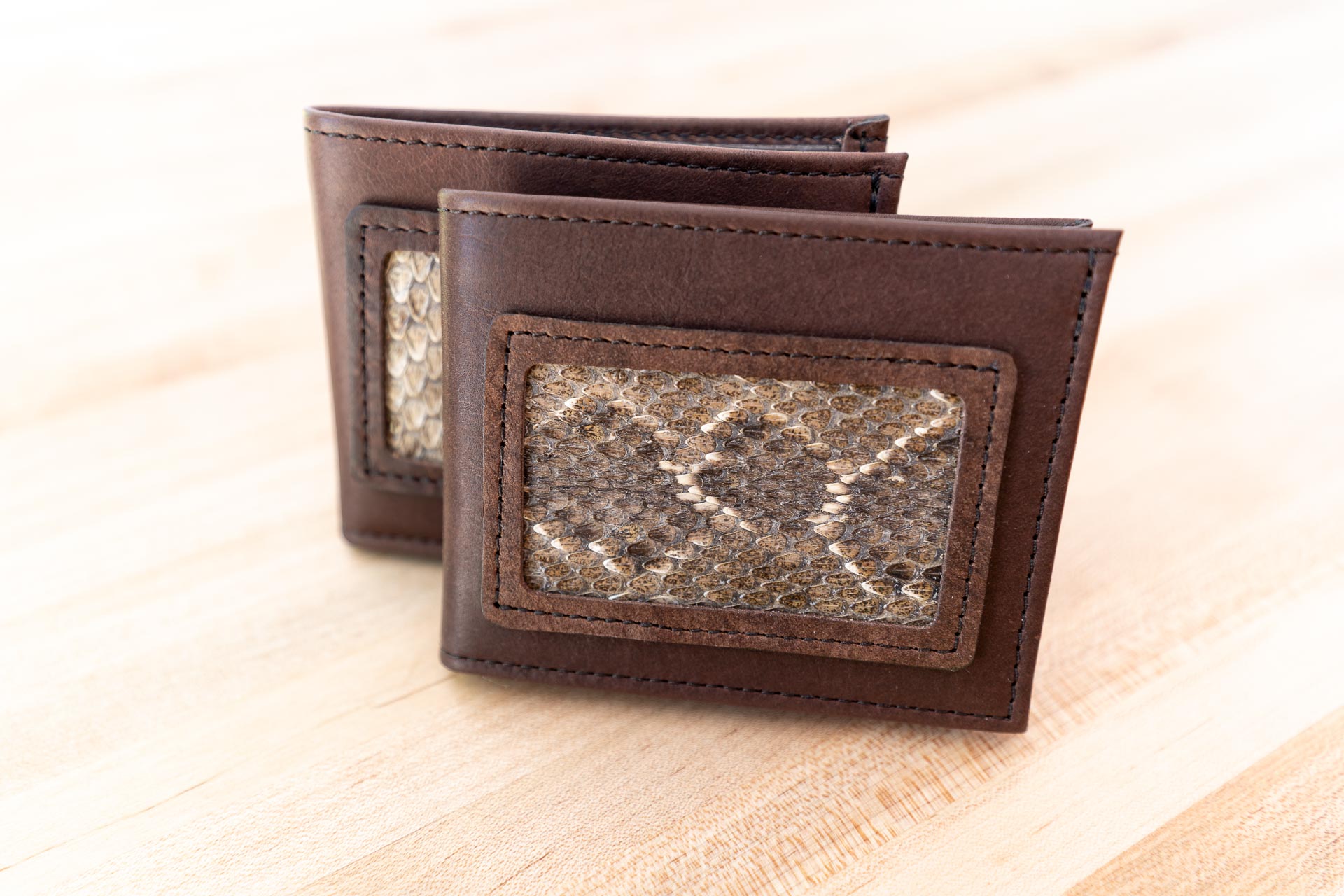
An inlay places the snakeskin within an opening in another piece of leather. On our Rattlesnake Bifold Wallet, we stitch a bison leather appliqué onto the front to help protect the rattlesnake inlay. That protective construction is an important part of the design.
Popular products made with rattlesnake skin
Rattlesnake wallets
A rattlesnake skin wallet combines a compact everyday accessory with a noticeable natural accent. When comparing wallets, look beyond the exterior. Check the card pockets, stitching, fold, and the way the snakeskin edges are secured.
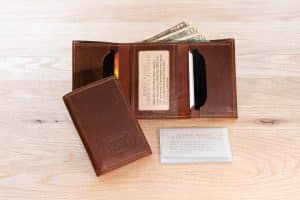
Our rattlesnake wallet combines American Bison leather with genuine snake skin in a bifold design, handcrafted in the USA. Its leather construction is just as important as its appearance.
Rattlesnake guitar straps
A rattlesnake guitar strap offers a longer space for the natural pattern. Because the strap supports an instrument, the main leather body, attachment points, and adjustment system deserve particular attention.
Our Rattlesnake Guitar Strap combines full-grain American Bison leather with real rattlesnake skin and an adjustable length. It brings Western character to a working musician’s accessory.
Rattlesnake purses and bracelets
A rattlesnake purse can use an inlay as a focal point while the surrounding leather forms the bag. Our Diamondback Dakota Leather Purse pairs bison leather with diamondback rattlesnake inlay.
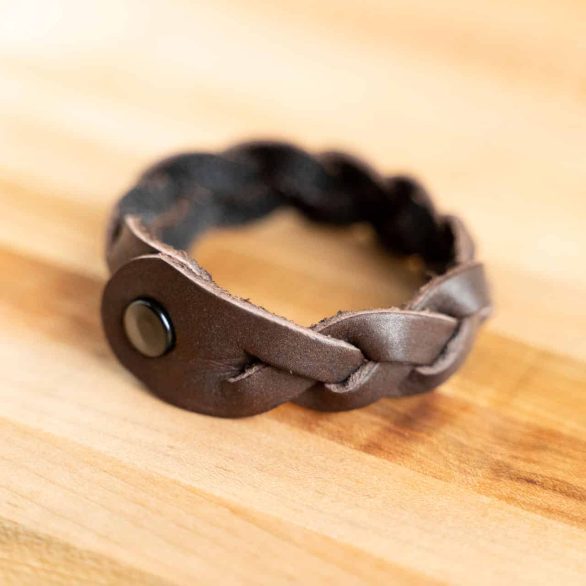
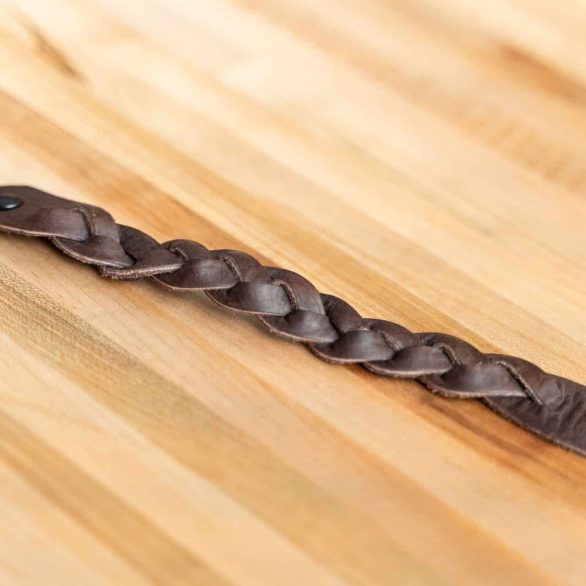
For a smaller craft project, a rattlesnake skin bracelet can use a narrow patterned section on a leather backing. Plan the closure and finished edges carefully, and avoid leaving delicate edges where clothing can catch them.
How to source quality rattlesnake skin
Start with a leather supplier or tannery that can explain the material. Before purchasing, ask:
- What species is it, and where did it come from?
- Is it tanned for flexible leather goods or dried for display?
- What are the usable dimensions, excluding damaged or unsuitable areas?
- Are there holes, tears, loose scales, or repairs?
- What adhesive, finish, and care products does the supplier recommend?
Clear sourcing information matters. An “ethical” or “sustainable” label should come with an explanation of how the skin was obtained. Legal sale alone does not answer every question about animal welfare or environmental impact.
Check applicable wildlife requirements before buying, shipping, or traveling internationally with skins or finished goods. The U.S. Fish and Wildlife Service cautions that wildlife products offered for sale may still be restricted or require permits when crossing borders.
Crafting a wallet with a rattlesnake inlay
For a first project, use an established wallet pattern and practice the inlay on scraps. Tandy Leather describes both surface and framed approaches to adding exotic leather; a framed design provides a useful starting point for understanding how the pieces fit together.
Typical tools include a cutting mat, sharp knife, ruler, marking tool, stitching irons or an awl, needles, thread, and an adhesive suitable for the chosen leathers. Follow the pattern’s leather thickness and seam allowances.
- Plan the opening. Position the pattern to show the markings you want. Allow room for seams and the wallet’s fold.
- Cut the leather frame. Make clean cuts before placing the snakeskin beneath it.
- Prepare the inlay. Cut it larger than the opening so its edges can be secured behind the frame.
- Test and attach. Try the adhesive on scraps first, then secure the inlay according to the pattern and adhesive instructions.
- Assemble and stitch. Add the backing and pockets in the pattern’s specified order, keeping adhesive away from visible surfaces.
- Check the finished wallet. Inspect seams and edges, test card fit, and confirm it folds without pulling the inlay taut.
This is a planning overview; exact dimensions and assembly details depend on your pattern.
Caring for rattlesnake leather goods
Use a soft cloth and a light touch for routine cleaning. Avoid soaking or aggressive rubbing. Before applying a cleaner or conditioner, check with the maker and test it discreetly; a product suitable for the surrounding bison leather may not suit the snakeskin or its finish.
Choosing a piece made for everyday use
Rattlesnake skin supplies the pattern, but thoughtful leatherwork makes the finished item useful. Look for secure inlays, well-finished edges, and a design suited to how you will carry or wear it.
Explore our rattlesnake leather goods to see how we combine genuine rattlesnake skin with full-grain American Bison leather in handcrafted American-made products.




 Google
 Facebook
 Trustindex


