
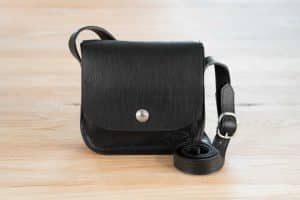
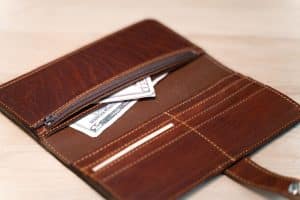


Leather thickness is a material measurement, not a quality grade. In U.S. leatherworking, thickness is commonly described in ounces (oz); suppliers also list millimeters (mm). One ounce is approximately 1/64 inch, or 0.4 mm. The right thickness depends on the job: a wallet pocket, bag body, and belt need different balances of flexibility, structure, and bulk.
There is no single “best” weight for every project. The chart is a practical starting point, not a rule. Leather type, tannage, firmness, hide area, construction, and the number of layers all affect the finished item.
Leather thickness conversion chart: ounces to millimeters
| Leather weight | Approx. thickness | Common project examples |
|---|---|---|
| 1–2 oz | 0.4–0.8 mm | Thin linings, small inlays, flexible details |
| 2–3 oz | 0.8–1.2 mm | Wallet interiors and pockets, light linings |
| 3–4 oz | 1.2–1.6 mm | Wallet exteriors, card cases, small bags |
| 4–5 oz | 1.6–2.0 mm | Clutches, notebook covers, medium bag panels |
| 5–6 oz | 2.0–2.4 mm | Structured bags, cases, some medium belts |
| 6–8 oz | 2.4–3.2 mm | Sturdy straps and belts, tool pouches, holsters |
| 8–10 oz | 3.2–4.0 mm | Heavy belts, saddlery, harness, demanding straps |
| 10 oz and up | 4.0 mm and up | Heavy-duty leatherwork needing substantial body |
These ranges overlap because the design changes what works. A wallet uses several overlapping pieces, so lighter leather can help it fold without excess bulk. A belt often needs more body to hold its shape. A lined or supported bag panel may use a different weight than an unlined panel.
What does an ounce of leather mean?
When a leatherworker says “three-ounce leather,” the ounce is a conventional thickness scale. It does not mean that a square foot of the leather weighs three ounces, or that the finished item weighs three ounces. The usual conversion is approximately 1 oz = 1/64 inch = 0.4 mm. For quick comparisons, 2 oz is about 0.8 mm, 3 oz about 1.2 mm, 4 oz about 1.6 mm, and 8 oz about 3.2 mm. These figures are rounded; suppliers may show slightly different ranges.
Millimeters express thickness directly in a metric unit. If you need a close match, compare measurements taken with the same method and ask whether the number describes the outside, lining, or every component.
How is leather thickness measured?
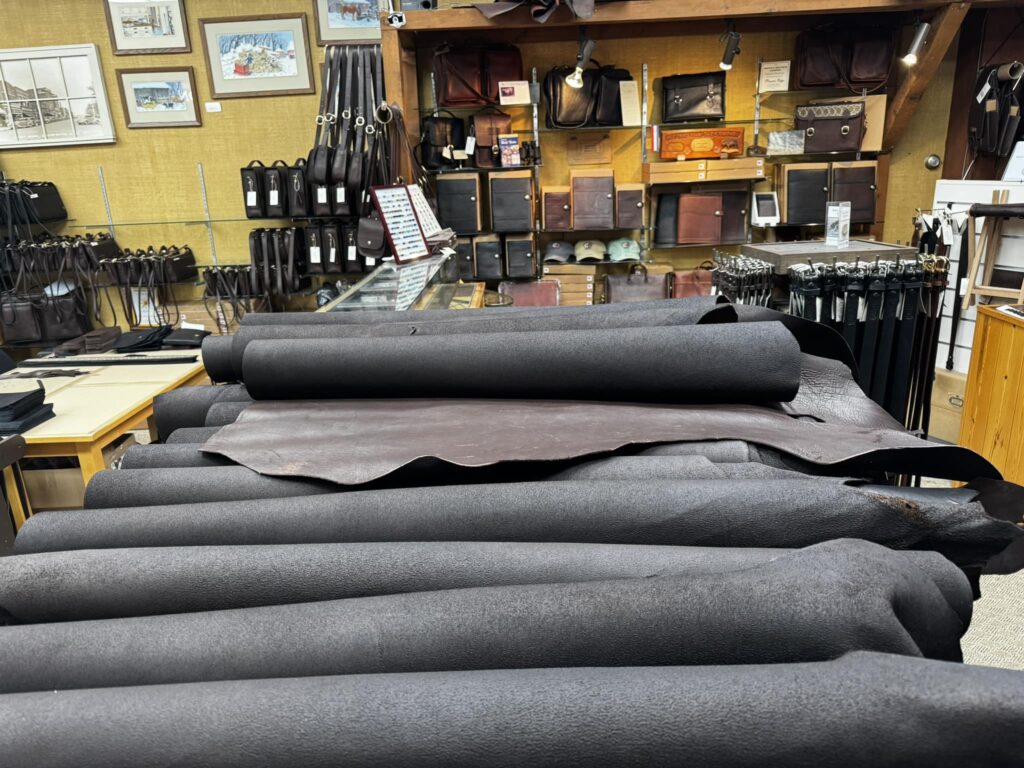
A supplier or leatherworker checks leather with a thickness gauge or other suitable measuring tool. A hide is not perfectly uniform, so readings can vary across its surface and between hides. Measure more than one area and avoid squeezing or compressing the leather. An advertised weight is best understood as a range or working specification, not a promise that every point on a natural hide is identical.
Leather can be split to reduce its thickness. A maker may also skive selected edges or folds, tapering the leather locally so overlapping pieces do not form an unnecessarily bulky ridge. These are normal ways to prepare material for a design; a thinner section is not automatically lower quality.
How to choose thickness for common leather goods
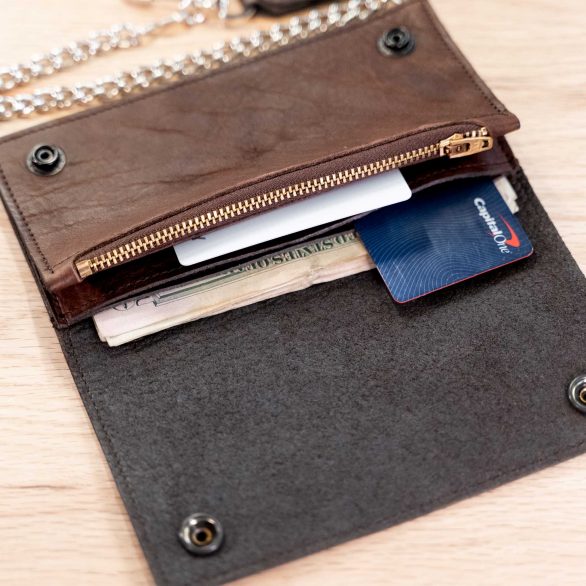
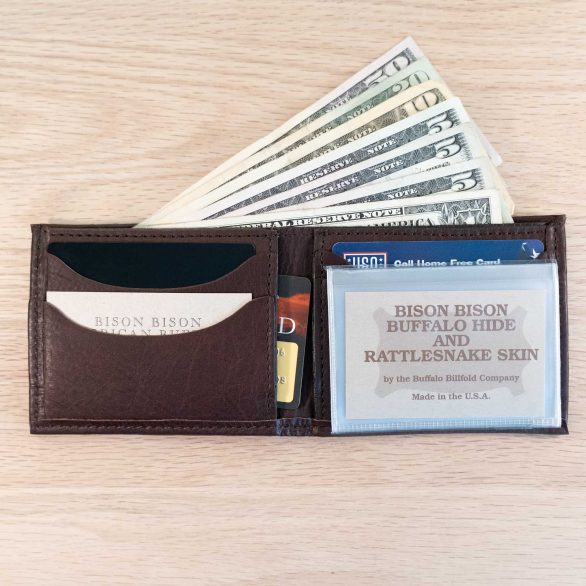
- Wallets: Interior pockets are often lighter than an outside panel. Several pocket layers overlap, so using heavy leather throughout can make a wallet stiff and bulky.
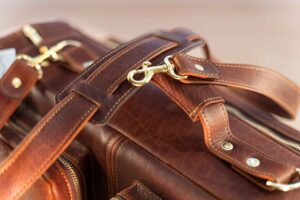
- Bags and purses: The body, base, handles, straps, and lining may need different weights. Lining or reinforcement can provide support without making every panel equally thick.
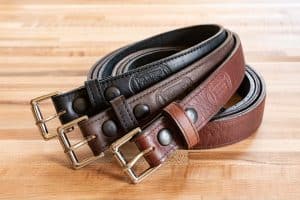
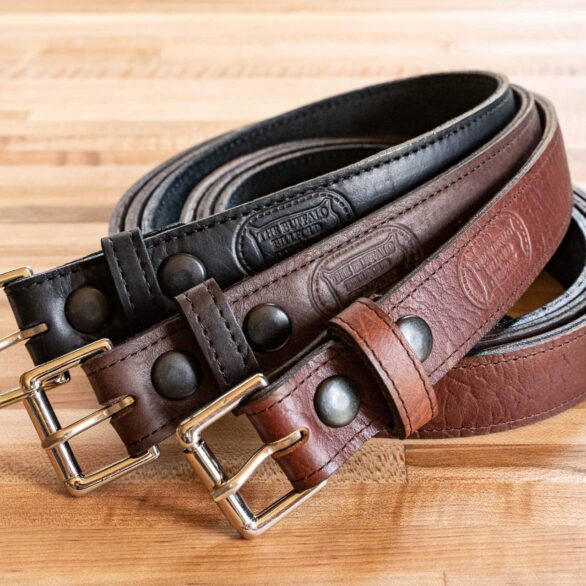
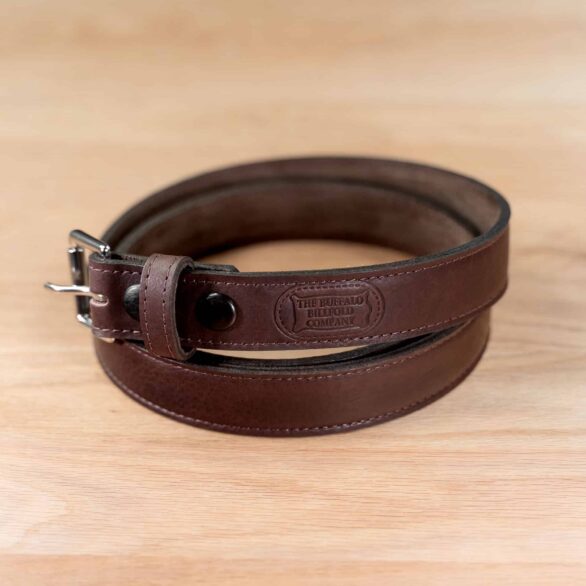
- Belts and straps: These often need more body than a wallet pocket because they span a longer distance and may carry tension or need to keep their shape. Width and construction matter too.
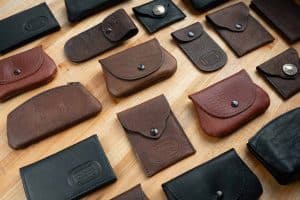
- Cases and covers: A notebook cover, tool pouch, or protective case needs enough body for regular handling while still opening and closing comfortably.
Use the chart as a first estimate, then ask how the maker uses the material in the actual product. A thickness number without the component, construction, and intended use is incomplete information.
Benefits and trade-offs of thicker leather
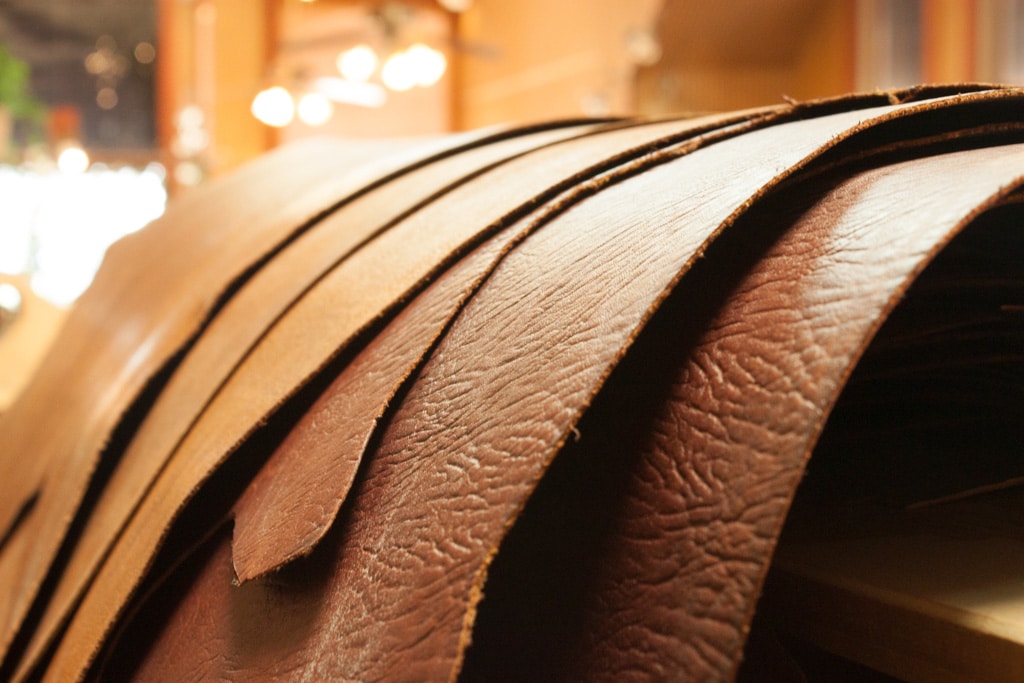
More thickness can add structure. It can help a panel keep its shape and suit parts exposed to bending, abrasion, or load. Some people also prefer the substantial feel of thicker leather.
More thickness also adds stiffness and bulk. It may be harder to fold, sew, turn, or layer neatly. At a wallet’s seams, pockets, and folds, material accumulates; thick leather throughout can make a wallet feel bulky even when empty. Extra weight can also be noticeable in a bag carried all day.
Less thickness can improve flexibility and reduce bulk. That helps with linings, pocket layers, and goods with many overlapping pieces. But leather that is too light for an unsupported, high-stress part may lack the body the design needs. The goal is to match thickness to each part—not to choose the heaviest leather for everything.
Does thicker leather mean better quality or durability?
No. Thickness alone cannot establish leather quality or predict how long a finished product will last. Leather type, fiber structure, tanning, finish, hide area, stitching, edge treatment, pattern design, and care also affect performance. A thick piece used in the wrong place can make a clumsy product; thinner leather selected and constructed for its purpose can make a durable everyday item.
Full-grain describes leather that retains its natural grain surface; it does not specify a minimum thickness. Two full-grain pieces can differ in thickness, firmness, stretch, color, and markings. A maker considers those differences when choosing which area of a hide belongs in each component. Read our full-grain leather guide for more on what the term means.
Leather thickness questions
How thick is 3 oz leather?
Three-ounce leather is approximately 3/64 inch, or 1.2 mm thick. The conversion is rounded, and individual pieces may vary.
Is 3 oz leather too thin for a wallet?
We’ve worked with leather for over half a century and have sold many wallets over that time. One thing we consistently notice is that if a wallet is pushing 4oz leather weight, customers don’t like them as much. It needs to feel good in the hand. This means that we try to use the thicker 4oz leather where it matters for durability, and 3oz in other places to keep the wallet thin. When a person is using a wallet, the experience matters. That experience isn’t just longevity, but daily use. Sure, a 6oz leather wallet is going to last 100 years, but it’s going to feel like a brick in your pocket. We’ve honed in on the perfect balance of longevity + daily use to bring you a leather wallet that is built to last, but also, built to use daily.
Should a belt use thicker leather than a wallet?
Generally, yes. Belts generally need more body than wallet pockets, but suitable weight depends on width, layers, use, and construction. Check the maker’s complete specification.
Can two pieces of the same weight feel different?
Yes. Thickness is only one property. Tanning, finish, hide area, fiber character, and handling can change a piece’s firmness, flexibility, and stretch.
Does full-grain leather have to be thick?
No. Full-grain describes the grain surface that remains on the leather; it does not define thickness. Thinner full-grain leather can be appropriate when the design calls for it.
Why leather thickness matters in a Buffalo Billfold Company wallet
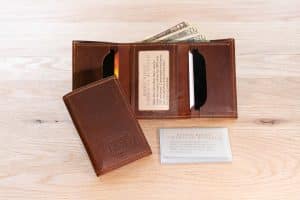
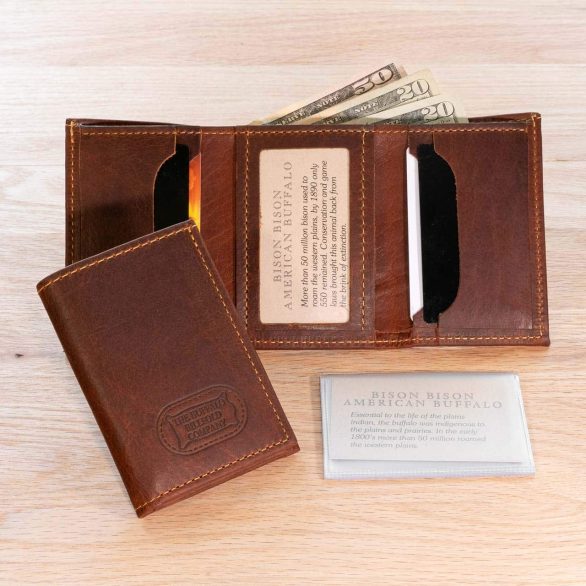
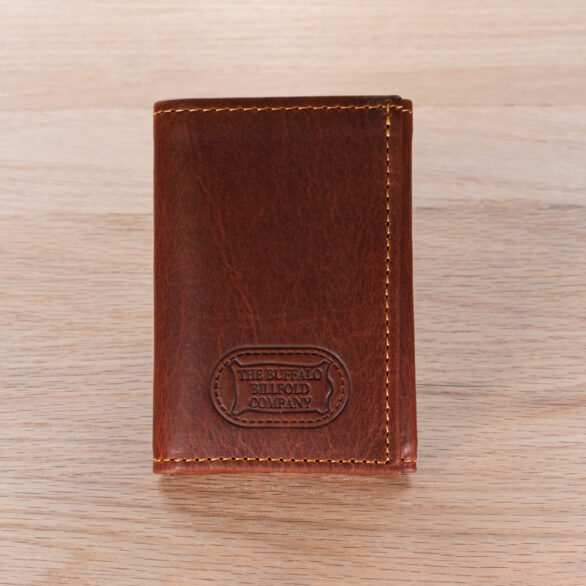
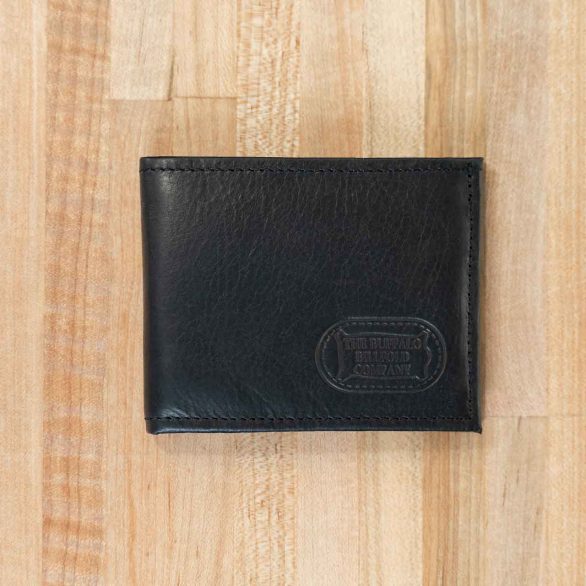
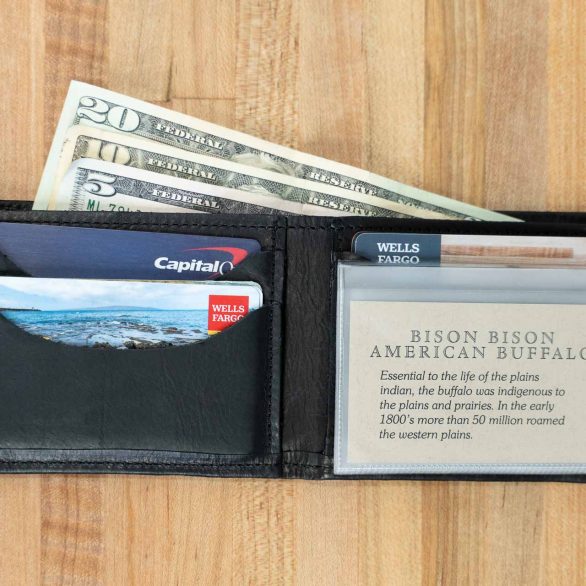
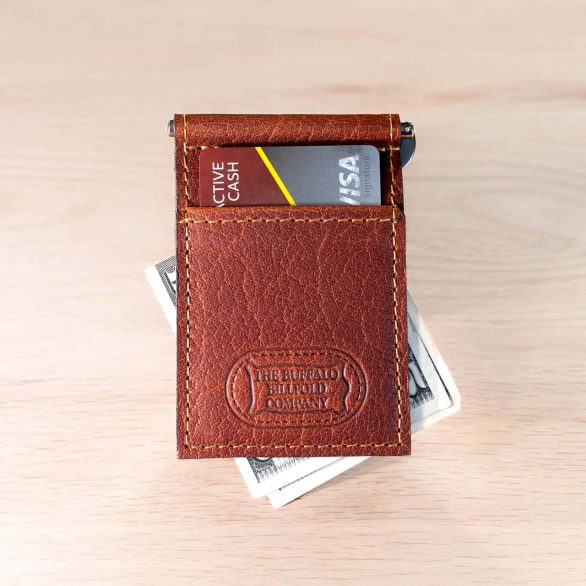
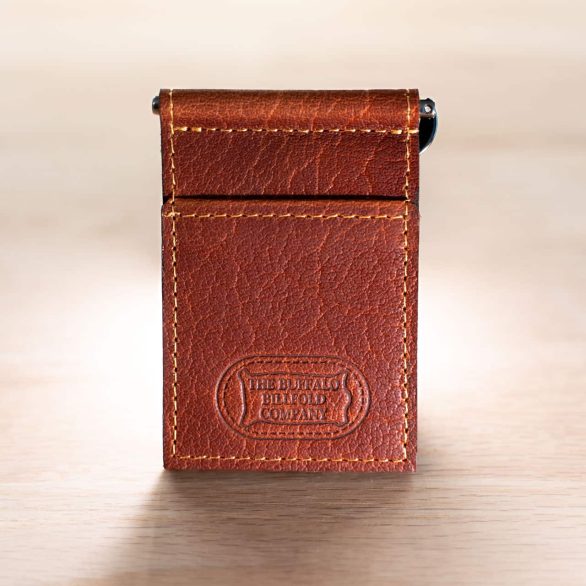
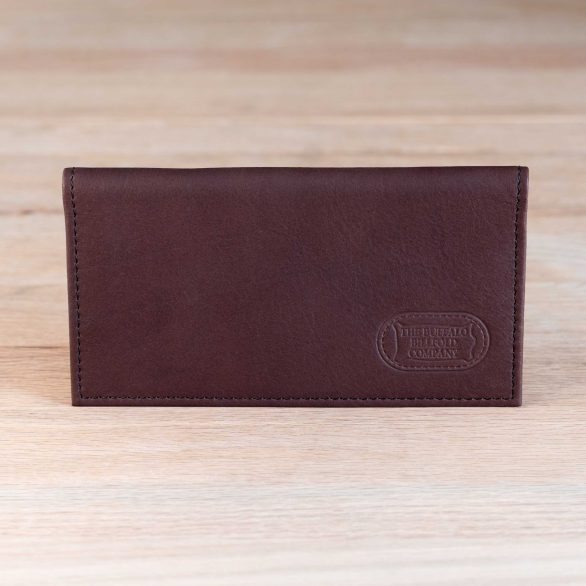
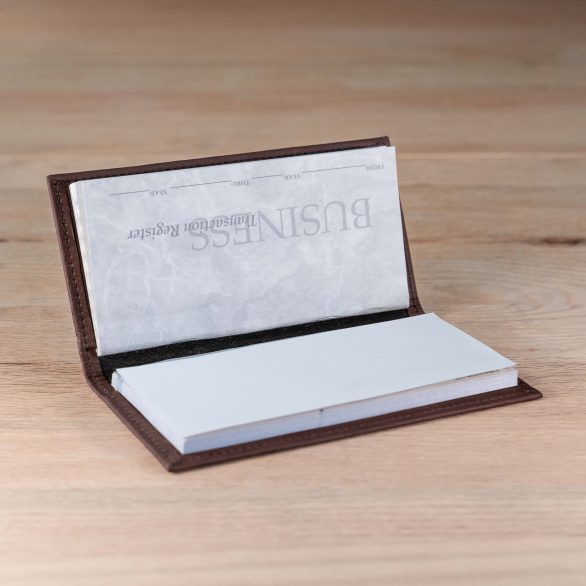
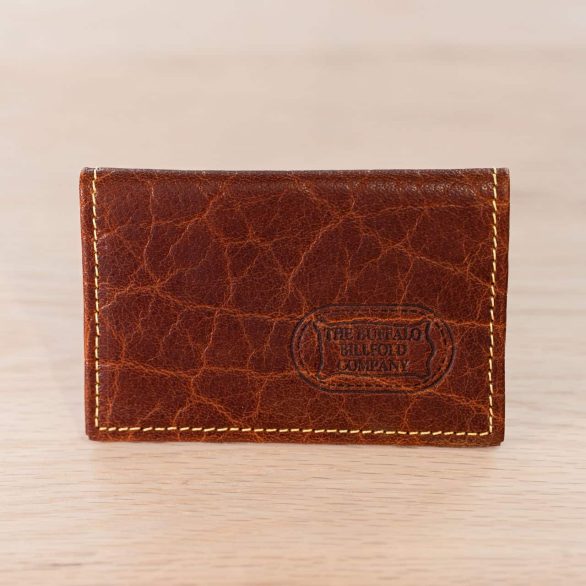
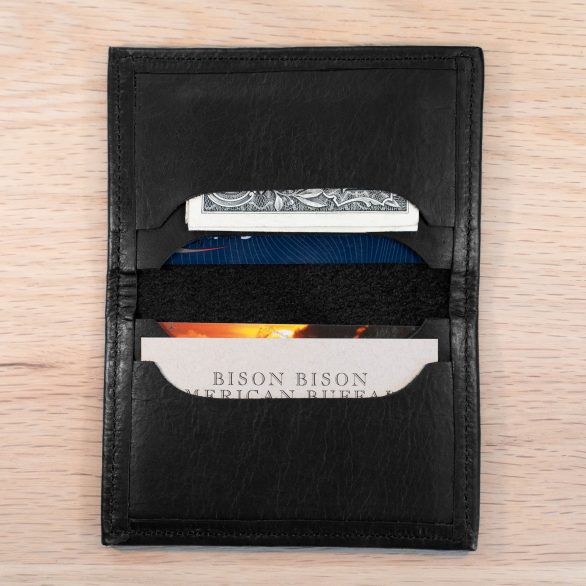
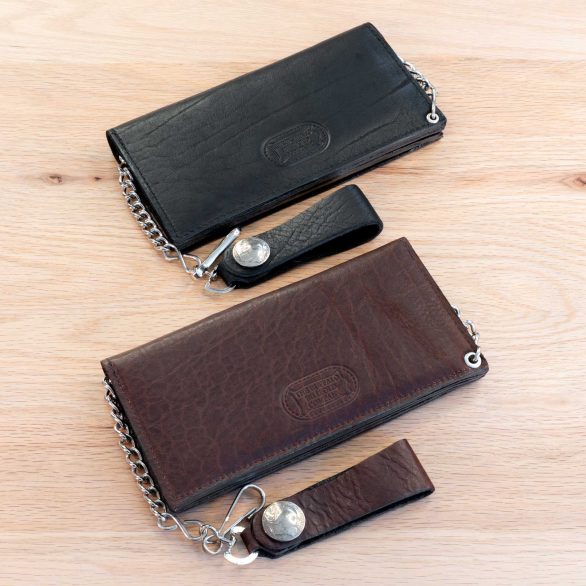
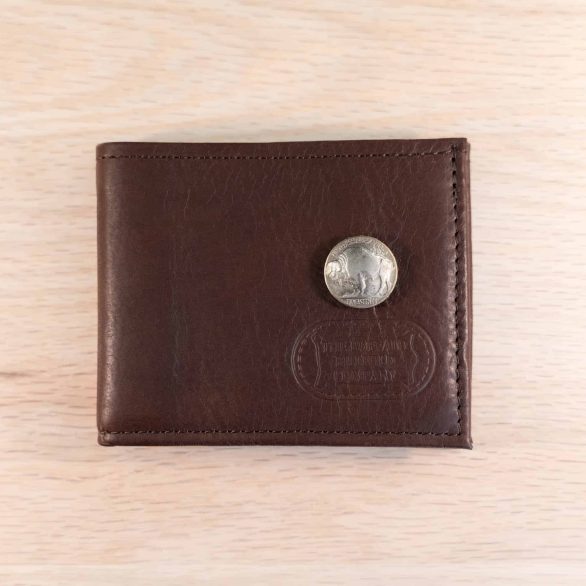
Buffalo Billfold Company uses 3 oz full-grain American Bison leather in its wallets—about 1.2 mm per layer. That lighter weight helps keep wallet layers and folds from adding unnecessary bulk, especially in a high-capacity design such as a trifold. Thinness is useful when the leather and construction still suit the job.
Our leathersmiths make wallets in our Worthington, Minnesota workshop and select pieces by hand. They consider the natural grain pattern, the area of the hide, how firm or stretchy a piece feels, its thickness, and subtle color variation. The outside shell, pocket base, card pockets, and ID-window border each have different jobs, so a hide is not simply cut at random and used the same way throughout.
Leather thickness is one of many choices that shape how a finished good feels and performs. Across wallets, bags, belts, and other leather goods, matching each component’s thickness to its job helps balance flexibility, structure, durability, and bulk. Explore our Slim Leather Wallets to see one way we apply that thinking to everyday carry.



 Google
  Facebook
  Trustindex


